
Charlotte Commercial Cleaning Services: A Scope Guide for Multi-Tenant Buildings
How to Build a Cleaning Scope for a Multi-Tenant Property
When arranging Charlotte commercial cleaning services for a multi-tenant building, your scope should identify each service area, the tasks performed there, the frequency, and who handles needs between visits. It should also distinguish shared spaces from tenant suites and recurring cleaning from separately scheduled work.
When planning Charlotte commercial cleaning services, start with how people actually use your property. A shared restroom serving several businesses has different demands from a conference room used twice a week. Those differences belong in the written plan before pricing and staffing are finalized.
Map Shared Spaces and Tenant Boundaries
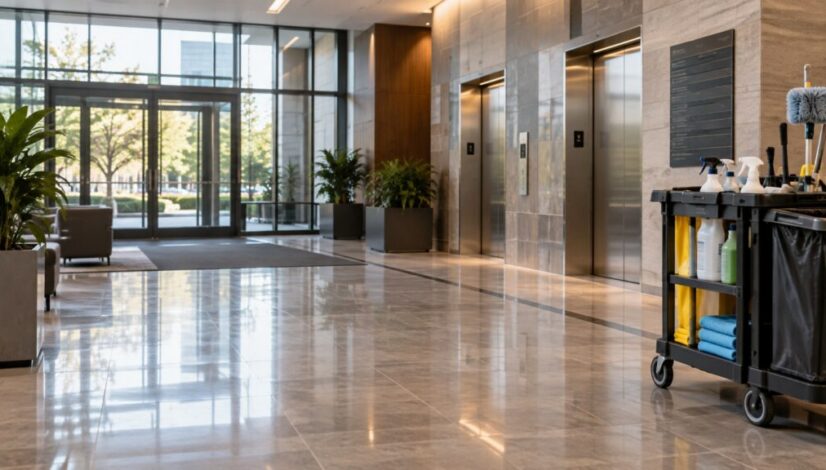
Before scheduling Charlotte commercial cleaning services, walk the property with a floor plan and mark every area the cleaning agreement will cover. List lobbies, elevators, hallways, stairwells, shared restrooms, breakrooms, and common waste collection points individually. Identify tenant suites separately, including those with their own cleaning arrangements.
Avoid a broad description such as “all common areas.” It leaves questions about secondary entrances, interior glass, elevator tracks, and shared meeting rooms unresolved. Name the locations and tasks that need attention.
For each area, record three details:
- What gets cleaned: fixtures, surfaces, floors, and receptacles.
- Where the work stops: suite entrances, restricted rooms, exterior surfaces, or other agreed boundaries.
- What access is required: keys, credentials, approved hours, and a contact for access problems.
Use the property’s existing agreements to confirm responsibilities, then translate those decisions into instructions the cleaning team can follow. The cleaning scope should document operational ownership without attempting to rewrite lease obligations.

Assign Responsibility Before Assigning Frequency
In a shared building, several people can assume someone else is handling the same task. Restroom supplies are an example: purchasing products, storing them, refilling dispensers, and reporting shortages are separate responsibilities.
When developing the scope for Charlotte commercial cleaning services, create an ownership table that clearly identifies responsibilities. The entries below illustrate what to resolve; they do not assign universal landlord or tenant duties.
Area or Task
Decision to Document
Detail to Confirm
Shared restrooms
Who purchases supplies and who refills dispensers?
Storage location and coverage between cleaning visits
Tenant suites
Which suites are included in the building contract?
Included tasks, access hours, and tenant contacts
Shared breakroom
Who handles routine cleaning and daytime spills?
Appliance exteriors versus separately agreed interior cleaning
Common-area trash
Who empties receptacles and who handles collection afterward?
Liners, designated collection point, and overflow reporting
Lobby and elevators
Who handles scheduled cleaning and daytime attention?
Covered surfaces and process for additional requests
Provide a simple version of this table to tenant contacts. It gives them a clear route for reporting a problem and helps prevent requests from bypassing the property manager responsible for approving changes.
Set Frequency Around Traffic and Operating Hours
Choose frequency by observing each area before the next scheduled visit. Check whether restroom supplies last, waste stays within receptacle capacity, and entrance floors need attention during occupied hours.
A Charlotte commercial cleaning services schedule should account for morning arrivals, lunch traffic, late-working tenants, and weekend use. A single building-wide frequency can overlook these differences.
Hypothetical example: A building has three tenants with different schedules. Two close at 5 p.m.; the third operates into the evening. The scope accounts for that later activity when scheduling shared restroom cleaning and confirming access, rather than assuming the whole property is empty at the same time.
For recurring work, specify both the task and interval. “Restroom cleaning each service visit” is clearer than “regular restroom maintenance.” Then identify needs between visits. If an evening crew handles the agreed cleaning, specify who addresses daytime spills or depleted supplies. Day porter coverage requires a separate service agreement rather than an assumption that the night crew provides it.
Separate Routine Tasks From Periodic Work
When defining the scope of Charlotte commercial cleaning services, write the recurring task list by area. Elite Touch’s standard scope provides concrete examples: restroom fixtures and mirrors; breakroom counters, sinks, and appliance exteriors; interior entrance glass; and hallway floors, handrails, and elevator buttons. The final scope is customized for each customer.
Confirm what tenants need to prepare before cleaning. Desks and conference tables are wiped when cleared. If tenant staff need to move papers or equipment beforehand, include that preparation in the instructions shared with them.
Next, create a separate list for periodic detailing and specialty work. Full interior glass cleaning and detailed edge vacuuming need agreed intervals. Carpet extraction, stripping and waxing, and floor scrubbing or burnishing need explicit agreement on inclusion, timing, and price. A task appearing on a quarterly planning calendar does not make it part of every routine cleaning contract.
Give each periodic task a location, agreed interval or condition for scheduling, and approval contact. This makes it possible to track work that will not appear on every visit’s checklist.

Make Inspections Match the Agreed Scope
Evaluate Charlotte commercial cleaning services based on the tasks outlined in your agreed scope. A general impression that the lobby looks good does not tell you whether restroom dispensers were refilled or scheduled glass cleaning was completed.
Use area-specific checks and record the location, missed task, date, and follow-up needed. Distinguish a task left incomplete from a space that was cleaned and then heavily used. That distinction helps determine whether the next action is a correction, a frequency adjustment, or daytime coverage.
Elite Touch uses site-specific cleaning checklists, supervisor inspections, photo time-stamp documentation, and a client communication log through SWEPT. Inspection frequency depends on site size, and each site has an assigned account manager and designated supervisor. These processes provide a way to review service against the property’s agreed requirements.
Define Communication and Scope Changes
Give tenants a reporting contact and ask for the location, observed issue, and time noticed. Specify who sends service requests to the provider and who can authorize extra work. Designate one property contact to coordinate requests from different tenants with your cleaning team.
Review the scope of your Charlotte commercial cleaning services when occupancy, operating hours, or shared-space use changes. A new tenant can increase restroom traffic without changing the building’s square footage. Record approved revisions in the working checklist so crews and tenant contacts receive the same information.
Build Your Property’s Cleaning Scope With Elite Touch
Elite Touch’s onboarding process includes scope confirmation, access setup, a kickoff meeting, a first-week inspection, and a 30-day check-in. Use those checkpoints to confirm that the written plan reflects the building’s daily activity.
Bring an annotated floor plan, a responsibility table, and your recurring and periodic task lists to your Charlotte commercial cleaning services scope discussion.
Discuss your property’s requirements with our team. We’ll help you build a cleaning plan that fits your building, with clear responsibilities and a schedule that works for your tenants.
