

What You Should Review Before Renewing a Charleston Commercial Cleaning Contract?
Renewal is when problems are easiest to catch and easiest to ignore
Most buildings renew with the same vendor because switching feels like a hassle. The crew shows up, the doors open on time, nothing’s on fire, so the Charleston commercial cleaning contract rolls over for another year without anyone really looking at it.
That’s exactly how the wrong details get locked in for another twelve months.
Renewal is the one point in the year when you can actually stop and ask: does this contract still match how the building runs today? Not how it ran when you signed it. In Charleston, where foot traffic, humidity, and seasonal tourism swings all put real wear on lobbies and floors, “still fits” is doing a lot of work in that sentence. Elite Touch builds its Charleston service around exactly this: office cleaning, floor care, and janitorial support scoped to each property’s size and layout rather than a flat, one-size package. That’s the right lens for a renewal review, whoever you’re using.
If the building’s changed — more tenants, more foot traffic, common areas that don’t hold up like they used to — renewing without checking is how you end up stuck with the wrong plan for another year.
Start with whatever’s generated the most emails
Skip the contract document for a minute. Start with the list of spaces that have actually caused friction over the past term, the ones that show up in your inbox, your walkthrough notes, or tenant complaints.
In most Charleston properties, it’s the same handful of spots:
- Lobby and entry glass
- Shared restrooms
- Elevator interiors and buttons
- Breakrooms or tenant kitchens
- Common-area trash points
- Corridor floors near entrances
If it’s the same two or three areas every time, the problem probably isn’t “cleaning” as a category. It’s that the contract no longer reflects where the building actually takes its wear.
Before you renew, sit with these:
- Which spaces generate the most complaints?
- Which areas look tired first, by 10 a.m., by Wednesday, whenever?
- Which tasks do you keep having to re-explain to the crew?
- Which problems show up during business hours, not overnight?
That gives you a sharper answer than the usual “Are we happy with the vendor?” That question almost always gets a shrug.
Check the scope area by area, not by service label
This is where most renewals quietly go wrong.
A proposal that says “commercial cleaning services” or “nightly janitorial” sounds specific but tells you almost nothing. The only way to actually evaluate a Charleston commercial cleaning contract is to walk it space by space: restrooms, breakrooms, private offices, conference rooms, lobby and entry, hallways and stairs, elevators, shared trash handling. Elite Touch scopes its Charleston work this way — by area and by property, not by a generic package — and that’s the level of detail worth holding any vendor to at renewal time.
The test is simple: if people are still asking “wait, is that included?” partway through the contract term, the scope was written too loosely to begin with.
Make sure the schedule still matches how the building’s actually used
A Charleston commercial cleaning contract can list all the right tasks and still get the timing wrong.
This shows up a lot in Charleston buildings where common areas wear down faster than the schedule assumes. The crew’s doing exactly what the contract says, but the Charleston commercial cleaning contract may have been written for a slower building. Elite Touch offers daily, weekly, or fully customized cadences for this reason: a lot of “cleaning problems” are actually scheduling problems in disguise.
Look at what’s actually scheduled to happen nightly, weekly, monthly, and what’s only handled as an add-on or by request. Then hold that up against real traffic. If the lobby looks tired by midmorning, restroom supplies run low before lunch, or trash is visible well before the next scheduled pass, the contract is under-timed for your busiest spots. No amount of “the crew did their job” fixes a schedule problem.
Look hard at floors and the entry sequence
This is one of the highest-value parts of a renewal review, and the one people skip.
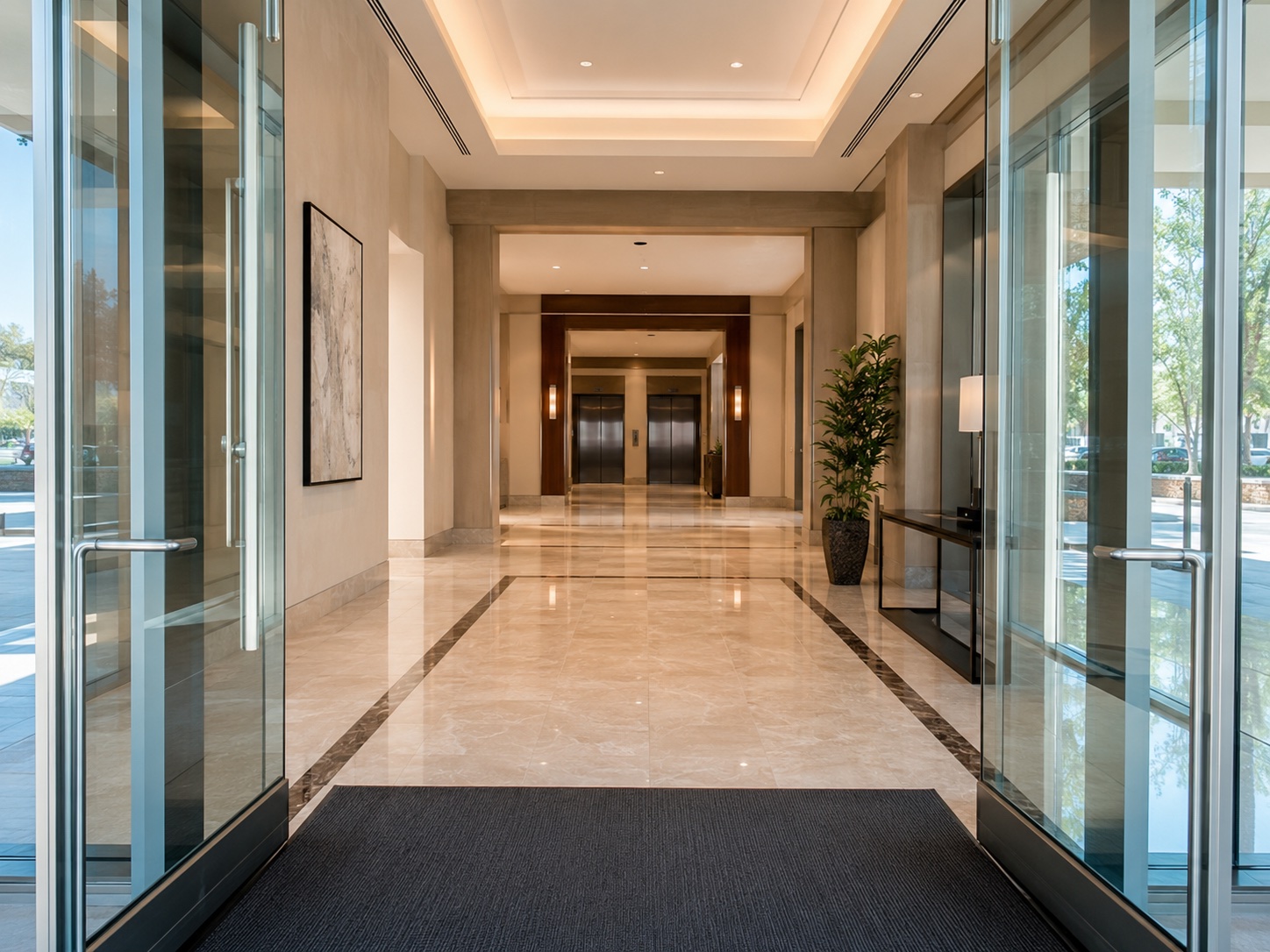
A building gets judged in the first ten steps through the door: entry glass, the vestibule, lobby floors, the elevator path, high-traffic corridors. All of that shapes how “clean” a property feels before anyone notices anything else. It’s also why Elite Touch calls out floor care specifically in its Charleston scope rather than folding it into general janitorial.
Before renewing, check:
- What floor types are actually in the building, and whether the contract treats them differently
- What maintenance is included per floor type (not just “floor care” as a catch-all line)
- Whether traffic lanes are visibly holding up or already showing wear patterns
- Whether entry mats and front-of-house care are pulling their weight
- Whether periodic floor work (stripping, waxing, deep extraction, whatever applies) is actually scheduled, or only happens when someone asks
A contract can read fine on paper and still be thin on floor care. That gap is usually why a building starts looking less polished even though the vendor never technically missed a visit.
Look at how the work gets checked, not just how it gets done
A solid Charleston commercial cleaning contract doesn’t just describe the work. It should also describe how that work gets verified.
Elite Touch leans on trained staff, consistent inspections, and a genuinely consultative account approach rather than a set-it-and-forget-it model. Whether or not that’s your current vendor, ask the same question at renewal: is the structure in place to catch problems before you do?
Specifically:
- How are inspections actually performed, and by whom?
- How often do they happen?
- Are findings written down anywhere, or just mentioned in passing?
- Who owns the follow-up when something’s flagged?
- How fast do corrections actually happen?
- If the same issue keeps recurring, does anything change, or does it just get “addressed” again?
If your team is still the one doing most of the checking, reminding, and escalating, the contract is missing an accountability layer, and that’s worth fixing before you sign another term, not after.
Look at the people, not just the plan
Staffing stability matters as much as anything written in the Charleston commercial cleaning contract.
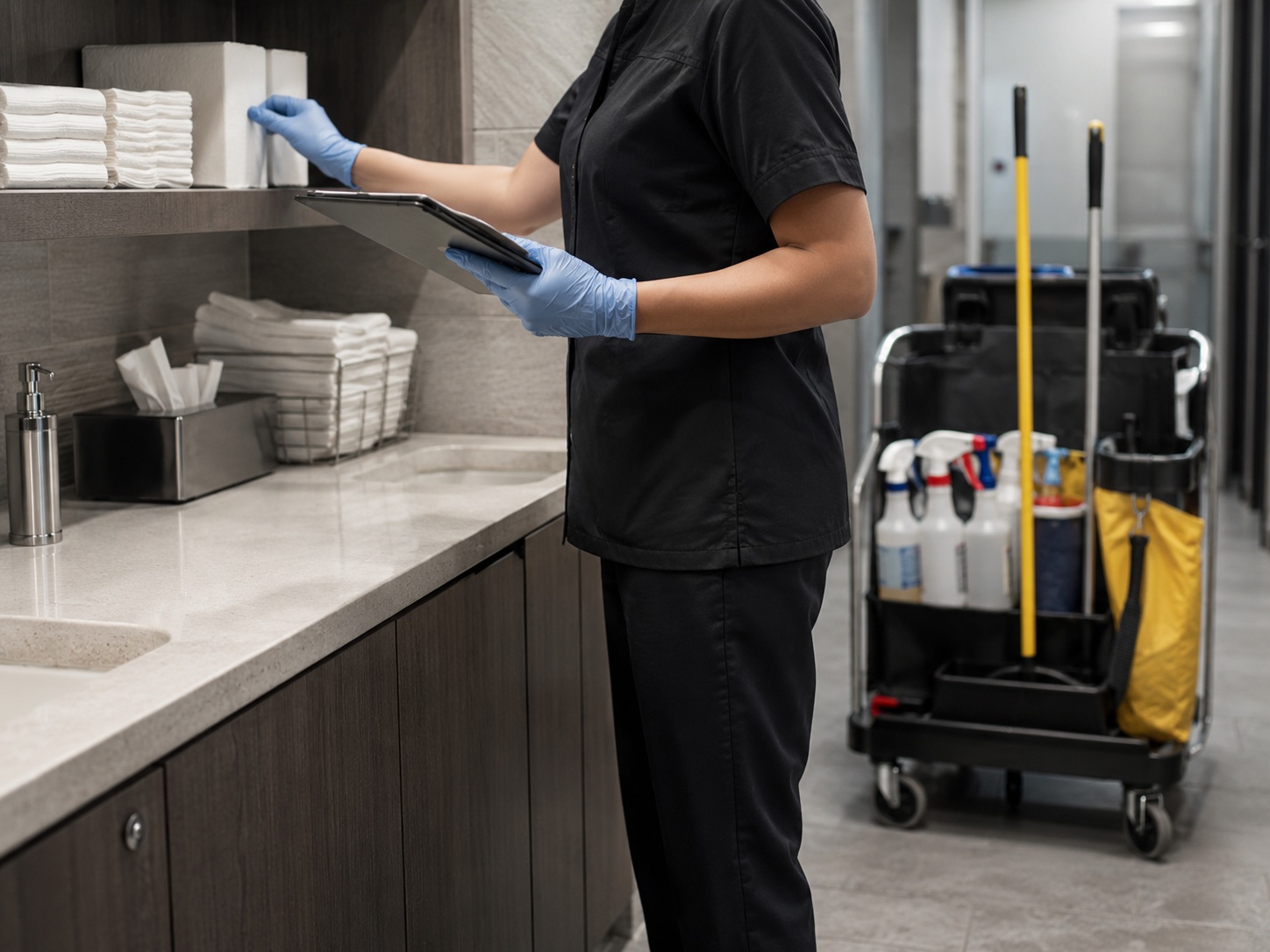
Has the same crew been on the building long enough to actually know where the pressure points are? Does the on-site supervisor understand the layout, or are they still learning it six months in? Is the account manager calling you before something becomes a problem, or only after?
Even a well-written Charleston commercial cleaning contract underperforms if the people behind it keep turning over. A building runs noticeably better when the crew already knows which restroom gets hit hardest at lunch, which conference room turns over three times a day, and which loading-dock trash point fills up by Thursday. If service quality keeps resetting because the team keeps changing, that’s a renewal conversation, not something to let slide.
What a real renewal review should land on
A serious renewal review ends in one of three places:
- Renew as-is: the plan genuinely still fits the building.
- Renew with changes: same vendor, but adjusted scope, frequency, or accountability.
- Reopen the vendor conversation: the service model isn’t working anymore, full stop.
That’s really the point of doing this review at all: it turns renewal into an actual decision instead of something that just happens by default because nobody objected.
The short version
Before renewing a Charleston commercial cleaning contract, walk through: the spaces generating the most complaints, the scope area by area, whether the schedule matches real traffic, floor and entry care specifically, how inspections and follow-up actually work, and whether the same team has stayed on your account long enough to know it well.
Put those six together, and you’ll have a much clearer read on whether your current agreement still fits the building. If your Charleston commercial cleaning contract no longer reflects how the property operates today, it may be time for a walkthrough to determine whether the next agreement should stay the same, be adjusted, or be rebuilt around the building’s current needs.
