
High-Traffic Floor Maintenance: 6 Essential Tips for Charlotte Businesses
Practical High-Traffic Floor Maintenance Strategies for Cleaner, Safer Commercial Spaces
Floors in busy commercial buildings can collect dirt, moisture, and scuff marks long before their next professional cleaning. For Charlotte businesses, maintaining those floors starts with a few practical habits: keeping entrance mats in good condition, removing soil regularly, addressing spills promptly, and using cleaning methods suited to each surface.
A consistent high-traffic floor maintenance routine helps control everyday buildup, protect flooring surfaces, and make it easier to identify when expert floor care may be necessary. The schedule should reflect how the building is used, particularly around entrances, elevators, corridors, and other heavily traveled areas.
1. Keep Dirt and Moisture From Spreading Beyond Entrances
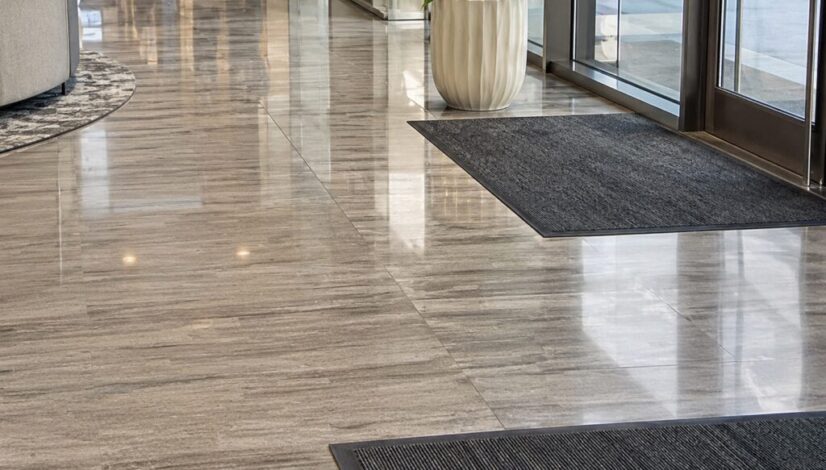
Entrance mats are one of the simplest ways to manage the dirt and moisture people bring into a building.
In Charlotte offices, condominium buildings, and commercial facilities, entryways can experience heavy foot traffic throughout the workday. Rainy conditions can also increase the amount of moisture tracked across floors.
For effective entrance maintenance:
- Use mats appropriate for the entrance, with enough coverage for visitors to walk across them before reaching the main flooring.
- Check that mats lie flat and remain securely positioned.
- Vacuum or clean mats regularly so accumulated dirt does not transfer onto surrounding floors.
- Inspect the flooring around and beneath mats for trapped moisture or debris.
Replace damaged or worn mats when they no longer perform their intended function.
As part of high-traffic floor maintenance, pay particular attention to the transition between entry mats and the surrounding flooring. This is often where tracked-in dirt becomes more noticeable.
2. Remove Loose Dirt Before It Builds Up
Daily soil removal should focus on the areas that receive the most activity.
Fine dirt, grit, and other debris can accumulate around entry doors, elevator thresholds, hallways, and workstations. When left in place, abrasive particles can contribute to surface wear as people continue walking over them.
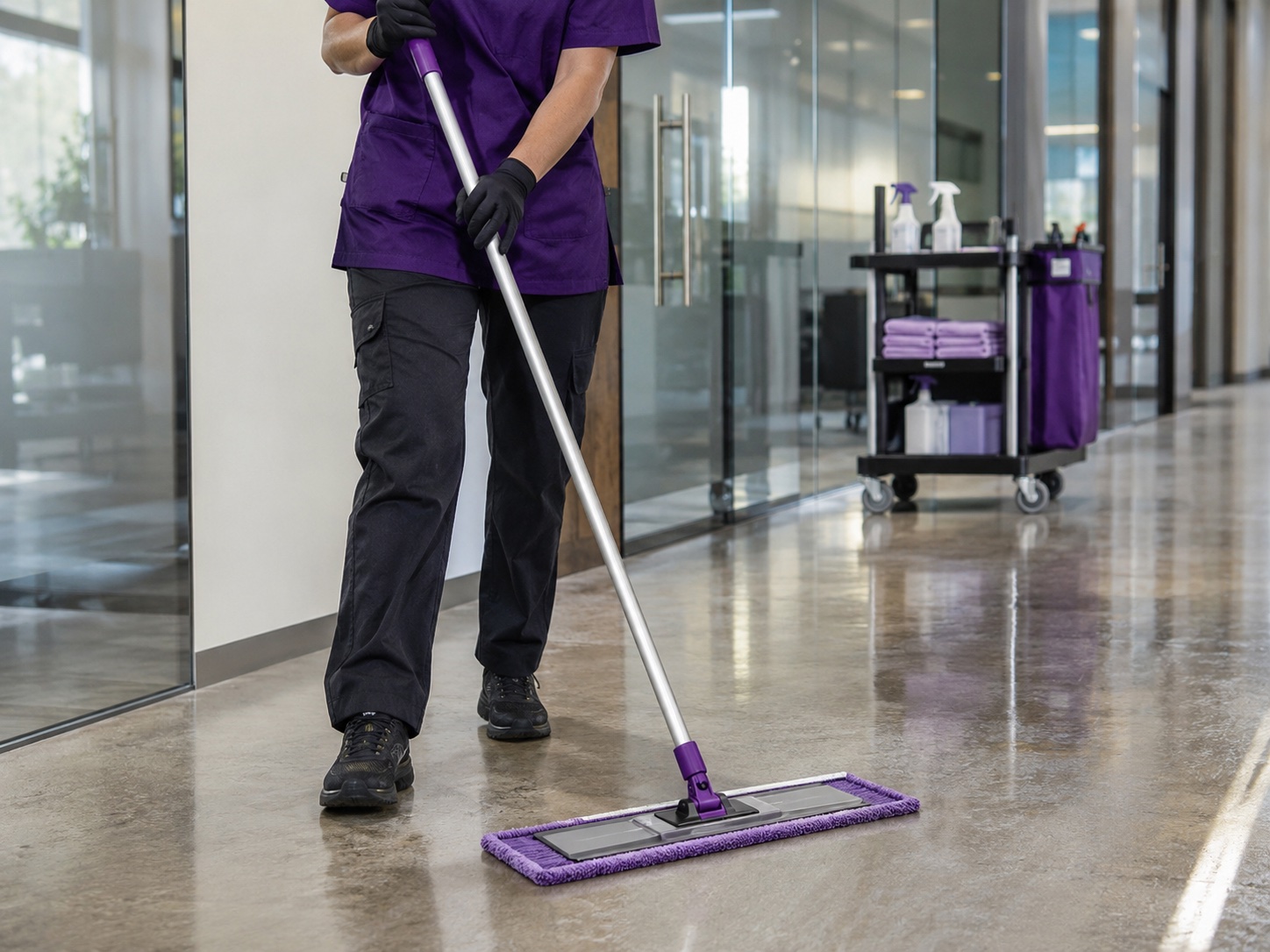
For hard floors, use a suitable dust mop, microfiber system, or vacuum approved for the surface. For carpeted areas, prioritize regular vacuuming along main walking paths and entrances.
Cleaning frequency should depend on building traffic rather than following the same schedule everywhere.
For example, a busy office lobby may need attention during the day, while a low-traffic conference room may only require cleaning during its scheduled service visit.
A practical high-traffic floor maintenance plan identifies which areas require daily attention and which need additional checks during peak hours. This targeted approach helps commercial property managers maintain cleaner floors while reducing unnecessary wear.
3. Address Spills and Spots Before They Become Larger Problems
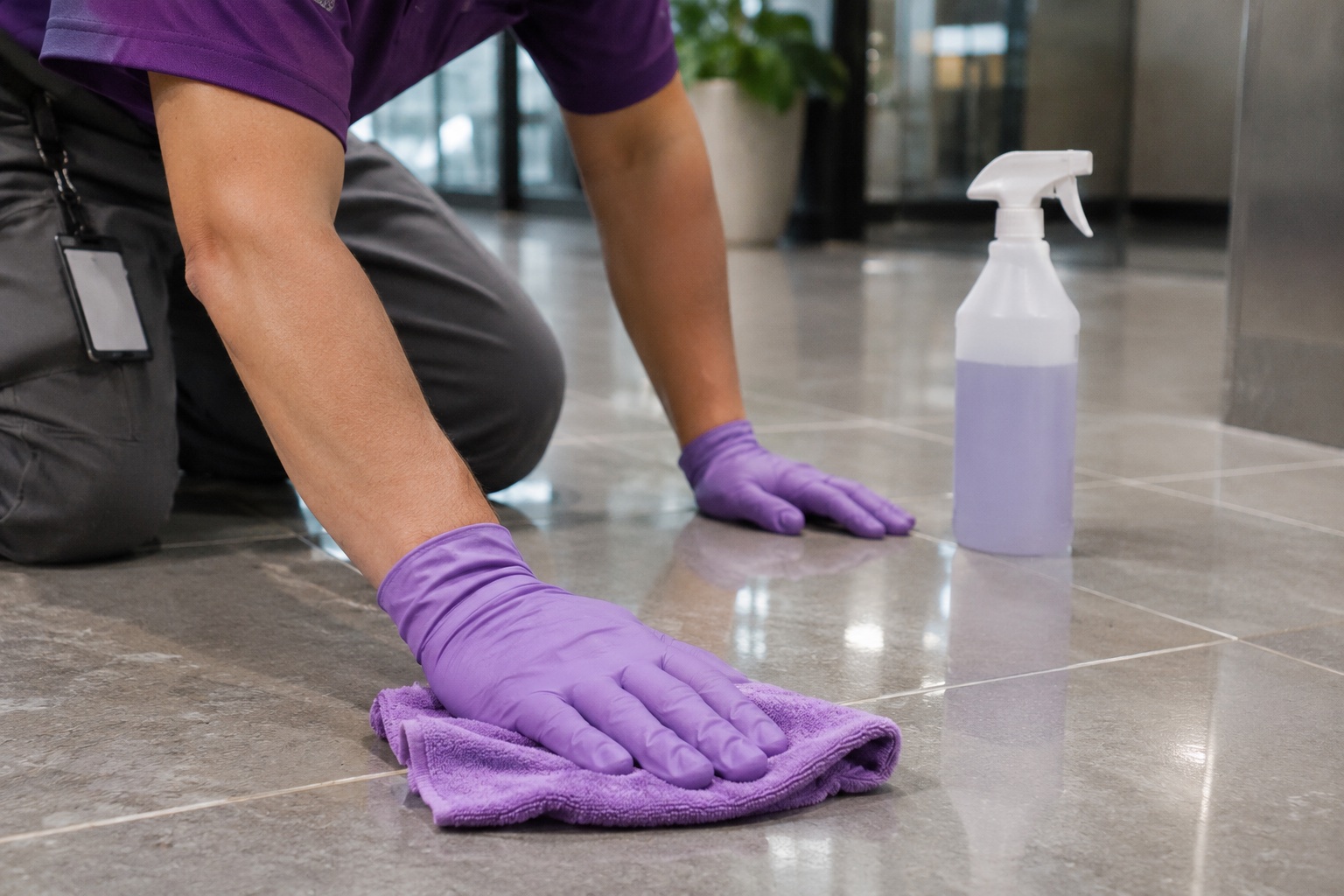
Spills should be addressed promptly using methods appropriate for the flooring material.
Coffee, water, tracked-in moisture, and other everyday spills can affect a floor’s appearance and create slipping hazards if left unattended.
When a spill occurs:
- Secure the affected area and use appropriate warning signs or barriers.
- Identify the flooring material and the type of spill.
- Follow the facility’s approved cleanup procedure using compatible products and equipment.
- Check that the surface is safe and dry before reopening the area.
If a spill involves an unidentified substance, hazardous material, or contamination beyond the cleaning team’s training and approved scope, restrict access and contact the appropriate personnel.
For carpet, avoid aggressive scrubbing or excessive moisture. Improper spot treatment can spread a stain or damage the material.
Spot cleaning is a useful part of high-traffic floor maintenance, but persistent stains should be assessed before repeated treatments are attempted. When standard cleaning procedures fail to resolve the problem, professional cleaning services may be necessary to prevent further damage.
4. Match Routine Cleaning Methods to the Floor Material
Different commercial floors require different maintenance approaches. Using the wrong cleaning product or equipment can damage finishes or leave unwanted residue.
For carpeted areas, regular vacuuming helps control dirt along busy walking paths, while spot treatments should follow the carpet manufacturer’s recommendations. Hard surfaces such as vinyl composition tile (VCT), ceramic tile, and polished concrete also require cleaning products and methods suited to their finishes.
Pay particular attention to moisture-sensitive surfaces and flooring with protective coatings. Before introducing a new product or cleaning method, confirm that it is compatible with the material.
For property managers overseeing commercial facilities throughout Charlotte and the Carolinas, documenting these requirements helps cleaning teams maintain consistent care without applying the same method everywhere.
Effective high-traffic floor maintenance should preserve the floor’s condition between scheduled services without introducing unnecessary treatments. Working with a trusted commercial cleaning provider can also help property managers establish appropriate cleaning procedures for different flooring materials.
5. Watch for Signs That Routine Cleaning Is No Longer Enough
Some floor conditions require equipment, treatments, or technical expertise beyond everyday cleaning.
During walkthroughs, look for changes that remain visible after the regular cleaning process:
- Persistent dullness: Areas that no longer respond to routine cleaning.
- Embedded soil: Carpet traffic lanes that remain visibly discolored after vacuuming.
- Recurring stains: Spots that return or resist approved cleaning methods.
- Finish wear: Uneven appearance, visible deterioration, or loss of the protective finish.
- Damaged surfaces: Loose tiles, lifting edges, or uneven flooring that may require repair.
These observations help property managers determine when to request expert floor care from a trusted commercial cleaning provider, inspect the flooring condition, or contact a qualified repair specialist.
Machine scrubbing, carpet extraction, floor burnishing, and stripping or refinishing are separate from routine janitorial cleaning unless specifically included in the service agreement.
For high-traffic floor maintenance, the important distinction is knowing when to continue routine care and when to schedule a professional assessment.
Addressing these warning signs early can help facility managers make informed decisions about specialized cleaning services, flooring repairs, and long-term maintenance requirements.
6. Use a Simple Floor Inspection Routine
A brief walkthrough can help facility teams notice changes before they become recurring complaints.
Consider checking the following areas during regular inspections:
- Entrances: Mats, tracked-in soil, and moisture.
- Hallways and elevators: Scuff marks, debris, and heavily worn walking paths.
- Carpeted spaces: Visible traffic lanes and recurring spots.
- Hard floors: Dull areas, residue, and changes in finish appearance.
- Previously treated areas: Whether the condition improved or needs further attention.
Record recurring concerns, including their location and when they were observed. This information can help determine whether cleaning frequency needs adjustment or specialized work should be scheduled.
A documented high-traffic floor maintenance routine also helps managers communicate specific needs to their cleaning provider instead of relying on general complaints about floor appearance.
Regular inspections, combined with consistent communication and a customized commercial cleaning schedule, can help facilities maintain professional-looking floors between scheduled services.
When to Call Elite Touch
If your commercial floors continue to show embedded dirt, stubborn stains, worn finishes, or visible buildup despite consistent cleaning, it may be time to review your maintenance program.
At Elite Touch Cleaning Services, we provide trusted commercial cleaning and expert floor-care solutions for businesses throughout Charlotte and the Carolinas. Our customized cleaning plans consider your flooring materials, building traffic, and specific maintenance requirements to help preserve the appearance and condition of your commercial spaces.
Our team also uses site-specific cleaning checklists, supervisor inspections, and documented communication to help maintain consistent service quality.
When routine cleaning is no longer enough, contact the professionals at Elite Touch Cleaning Services. Contact our team to discuss your high-traffic floor maintenance needs and discover a customized cleaning solution that works for your facility.
FAQs: High-Traffic Floor Maintenanc
-
High-traffic commercial floors should receive daily cleaning, with additional attention during peak business hours when necessary. Entrances, hallways, elevators, and lobbies often require more frequent maintenance to control dirt, moisture, and debris. A customized high-traffic floor maintenance schedule helps Charlotte businesses maintain cleaner, safer floors while reducing unnecessary wear.
