
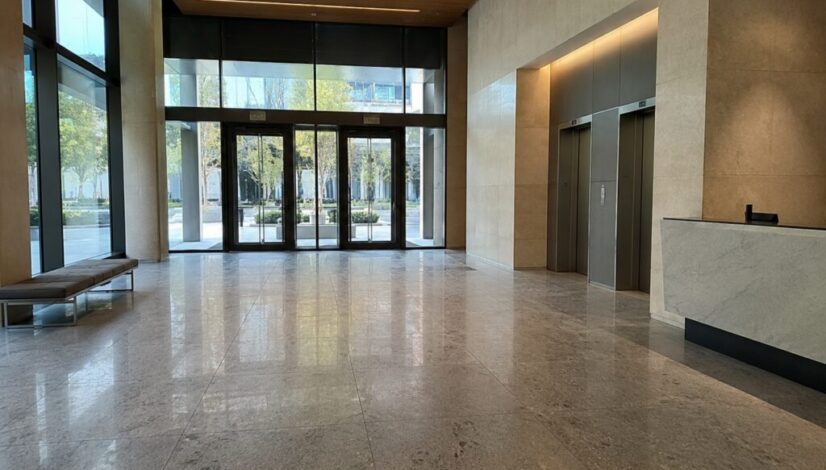
What to Expect After Reporting a Cleaning Issue in a Multi-Tenant Building
A cleaning issue in a multi-tenant building is rarely just about cleaning.
A missed restroom, overflowing trash, dirty lobby glass, or a neglected elevator — any one of these can trigger tenant complaints, put pressure on the front desk, and create extra work for the property team. When multiple tenants share common spaces, even a small oversight changes how the whole building feels. Fast.
That’s why how you respond matters as much as the fix itself. For property managers throughout the Carolinas, having a reliable response process can help reduce tenant complaints and maintain a professional environment across shared spaces. A reliable vendor should have a clear, consistent process for handling every reported issue — from the moment it’s logged to the moment it’s resolved.
Here’s what that process should look like.
1. The issue should be logged immediately
The first step sounds simple, but it’s where a lot of vendors fall short.
When a property manager, office manager, or tenant reports a cleaning issue in a multi-tenant building, it should be documented right away — not texted to someone who’ll “look into it,” not held in someone’s memory until the next shift. Informal follow-up is where complaints disappear.
A proper log should capture:
- What was reported and where it happened
- When it was noticed
- Who received the report
- How urgent it is
This gives the property team confidence that the complaint is officially in motion, not sitting in someone’s inbox waiting to be forgotten.
2. One person should own the response
Once the issue is logged, it should be immediately clear who is responsible for resolving it.
This is where a lot of vendors create extra frustration. The front desk calls one person, the property manager texts another, the cleaner says the supervisor handles it, and the supervisor says the account manager will follow up. Meanwhile, the problem sits.
A good vendor removes that confusion. Each site should have an assigned account manager and a designated supervisor — a direct path to resolution that doesn’t require the property team to coordinate on the vendor’s behalf.
In a multi-tenant building, this matters more than it might seem. Common-area complaints spread quickly. If ownership isn’t clear from the start, the building team ends up doing more coordinating than the vendor does.
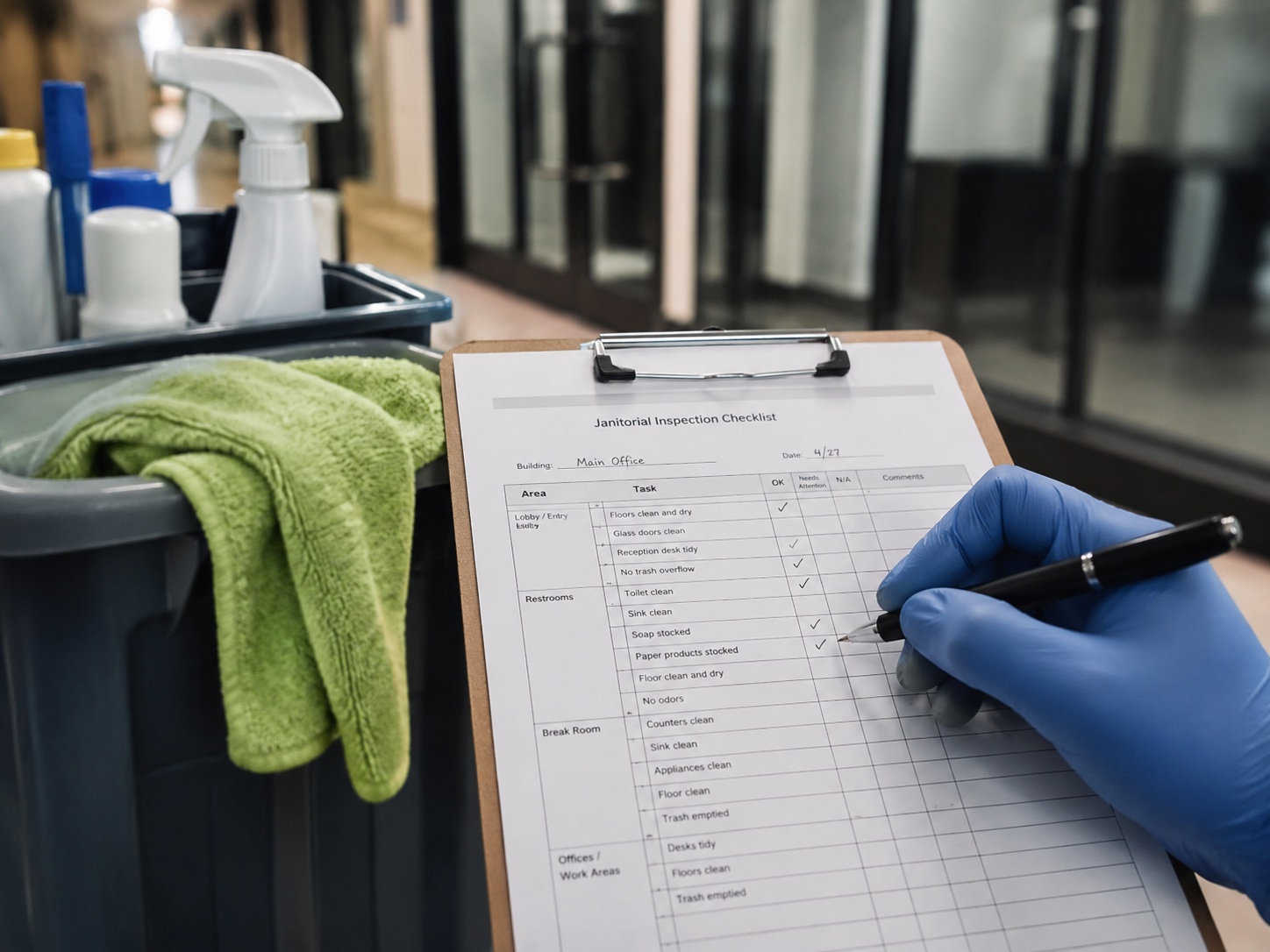
3. The issue should be verified, not assumed
Before deciding how to fix a cleaning issue in a multi-tenant building, someone needs to check what actually happened.
If third-floor restrooms weren’t fully stocked, someone should verify the actual condition. If lobby floors look rough after bad weather, the vendor should confirm whether it was a missed service, a traffic spike, or something outside the normal scope. Not every problem has the same cause — and the wrong fix wastes everyone’s time.
Some issues happen because a task was missed. Others point to a cleaning schedule that’s too light for the building’s traffic. Some reveal a communication gap that no amount of re-cleaning will solve. Verification is what tells you which one you’re dealing with. Proper verification also helps determine whether a cleaning issue in a multi-tenant building is an isolated incident or a symptom of a larger operational problem that requires attention.
Photo documentation with time stamps makes this step cleaner and removes any ambiguity about what was found and when.
4. The correction should happen within a clear time frame
Once a cleaning issue in a multi-tenant building is reported, the client shouldn’t have to guess when it will be addressed.
Visible problems in shared spaces — lobbies, elevators, restrooms, corridors, trash areas — affect multiple tenants at once. A slow or unclear response creates a second problem on top of the first one.
The vendor should give a clear commitment. Not every issue carries the same urgency — a supply restock may need to be handled the same day, while a recurring floor appearance problem may require a broader schedule review. But the timeline should always be stated, not implied.
A reasonable benchmark: corrections within 24 hours, with same-day resolution as the standard for visible, high-impact issues.
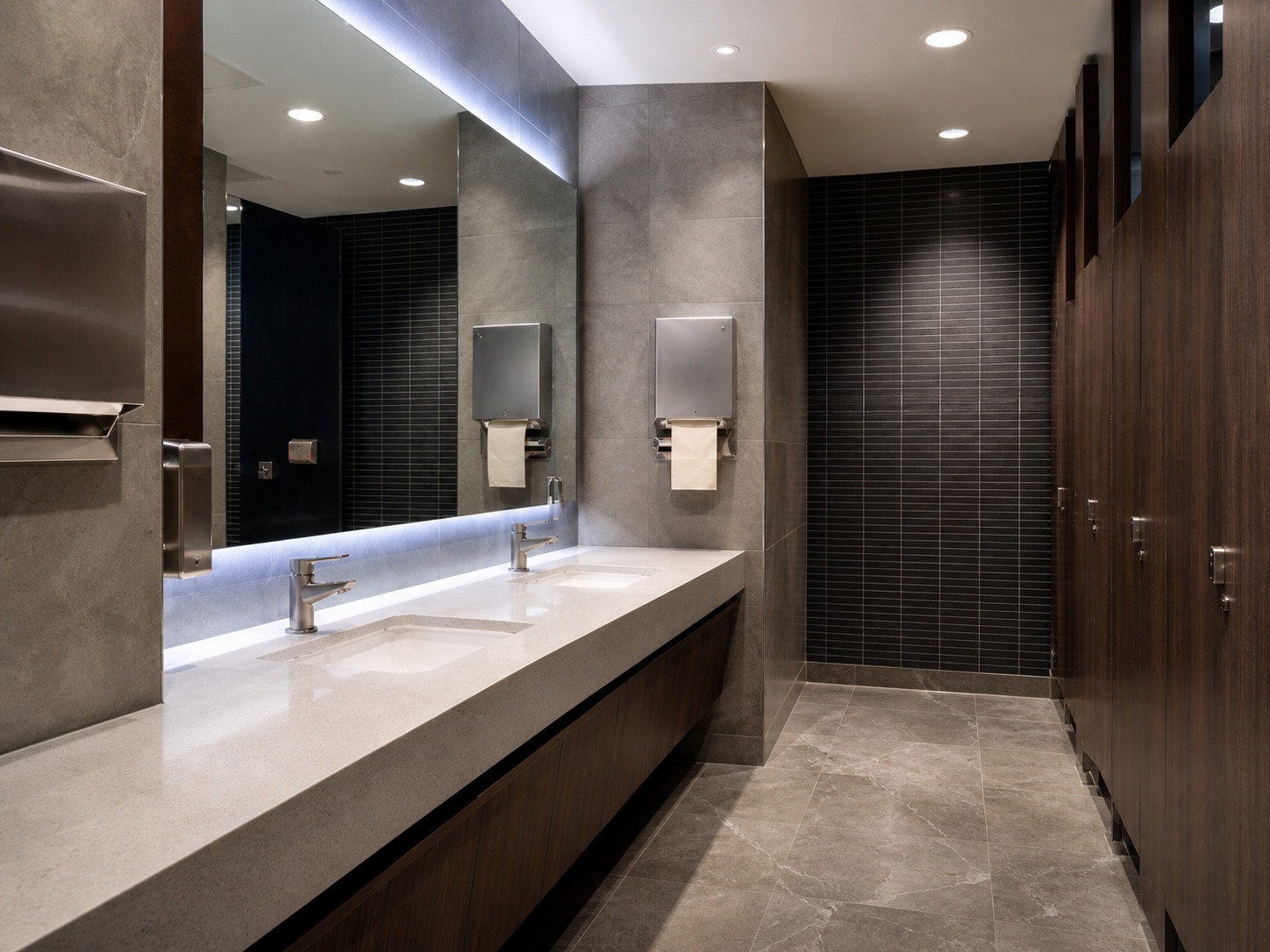
5. The client should receive follow-up, not silence
One of the most frustrating parts of reporting a cleaning issue in a multi-tenant building is not hearing anything back.
The issue might be fixed, but if the property manager doesn’t get confirmation, they’re left managing tenant questions without enough information. That puts the building team in an uncomfortable position — trying to reassure tenants about something they’re not sure has actually been resolved.
A better process closes the loop. The vendor confirms what was done, explains whether any follow-up is needed, and flags if the issue points to a larger pattern. That last part matters — communication shouldn’t just be a reaction to complaints. It should be part of the service itself.
6. Repeated issues should trigger prevention, not just another fix
If the same cleaning issue in a multi-tenant building keeps coming back, the process shouldn’t simply reset each time.
A good vendor looks for patterns. Is a restroom area getting hit harder during peak hours than the schedule accounts for? Is the lobby floor deteriorating faster because of seasonal foot traffic? Do trash touch-ups need to happen during the day, not just at night?
This is the difference between a reactive vendor and a managed cleaning program. When patterns are tracked and acted on, the response shifts from fixing the same problem repeatedly to adjusting the scope so the problem stops recurring. That might mean changing service frequency, adding day porter coverage, or focusing more resources on the areas that drift fastest.
For property managers, this is the step that actually reduces the volume of complaints over time — not just resolves them one at a time.
A quick way to judge whether the response process is working
After reporting a cleaning issue in a multi-tenant building, these six questions cut through most of the guesswork:
- Was the issue documented immediately?
- Did one person clearly own the response?
- Was the problem verified before the fix was applied?
- Did the vendor give a clear time frame for correction?
- Did you receive follow-up confirming the issue was resolved?
- If the problem has repeated, has anyone reviewed the root cause?
If several of those answers are no, the problem may not be cleaning quality. It may be a service system that isn’t built to handle issues properly.
What good issue resolution actually looks like
Reporting a cleaning issue in a multi-tenant building should set a clear process in motion — not a cycle of informal texts, unclear ownership, and repeated follow-up from your end.
The standard worth holding your vendor to: issues logged immediately, one owner assigned, problem verified, correction within a clear time frame, follow-up confirmed, and a plan in place to prevent it from happening again. When that process is consistent, tenant confidence holds up and the building is easier to manage day to day.
At Elite Touch Cleaning Services, we believe issue resolution should be proactive, transparent, and focused on preventing recurring problems before they affect tenant satisfaction.
If your current janitorial program feels more reactive than managed, a facility walkthrough is a practical first step toward understanding whether the issue is the cleaning itself — or the system behind it.
