
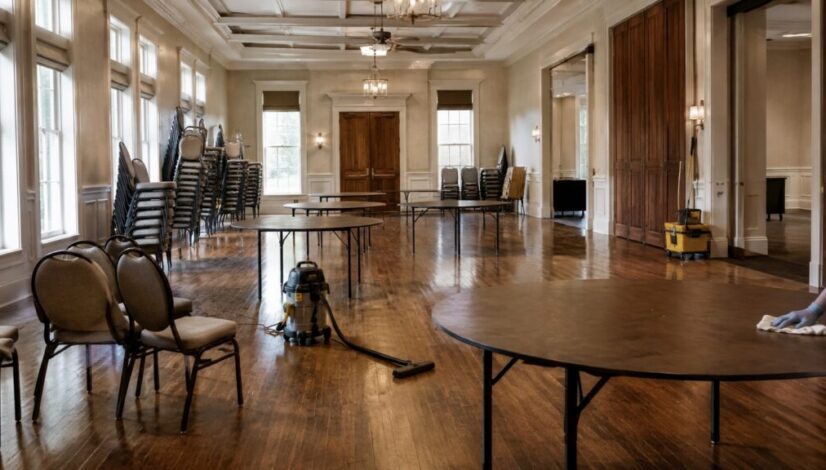
How Can Charleston Event Venues Prepare for Faster Turnovers Between Events? 7 Steps
A Charleston event venue cleaning checklist should help managers organize the turnover before the previous event ends. Define the real cleaning window, assign zones, identify guest-facing priorities, stage supplies, separate quick reset work from deeper services, coordinate vendor access, and finish with a readiness inspection.
Fast turnover comes from preparation, not rushed cleaning.
When one event ends and another begins soon after, several teams may need the same spaces at once. Guests are leaving. Caterers are breaking down. Rental teams are moving furniture. The next setup crew may already be waiting.
The best way to reduce delays is to decide who does what, where they work, and when they get access before the turnover starts.
1. Calculate the Real Cleaning Window
Start with the time the venue must be ready for the next event and work backward.
A Charleston event venue cleaning checklist should account for the actual cleaning window rather than assuming the entire gap between bookings is available for cleaning.
Map the full sequence:
- Guest departure
- Vendor breakdown
- Trash and equipment removal
- Cleaning access
- Next-event setup
- Final inspection
- Reopening or handoff
For example, an event room may officially close at 3:00 p.m., but the cleaning crew may not have full access at 3:00. Caterers may still be removing equipment, decorators may be taking down materials, or furniture may still cover areas that need floor cleaning.
Your Charleston event venue cleaning checklist should show when each area actually becomes available.
Check entrances, event rooms, restrooms, elevators, service corridors, loading areas, backstage spaces, and outdoor gathering areas separately. A large venue rarely becomes available all at once.
This also helps you identify work that does not fit into the turnover window. If a task requires more time, different equipment, or restricted access, schedule it outside the reset instead of forcing it into an already tight timeline.
2. Divide the Property Into Cleaning Zones
Once you know the available time, divide the venue into specific zones.
Depending on the property, those zones may include:
- Entrances and lobbies
- Ballrooms or event rooms
- Auditoriums and seating areas
- Restrooms
- Bars, concessions, or catering spaces
- Backstage areas and dressing rooms
- Elevators, hallways, and stairs
- Outdoor entrances or gathering spaces
- Waste collection points
When building a Charleston event venue cleaning checklist, give each cleaning zone three things:
- A designated owner
- A specific task list
- A completion check
This removes guesswork during the turnover.
Without clear assignments, two people may clean the same lobby while everyone assumes someone else is handling the restroom. A zone system makes responsibilities visible.
It also allows crews to work in stages. If vendors are still clearing the main event room, another team can reset the lobby or restrooms as soon as those areas become available.
A strong Charleston event venue cleaning checklist does more than list tasks. It tells the team exactly where each person starts and what must be finished before they move on.
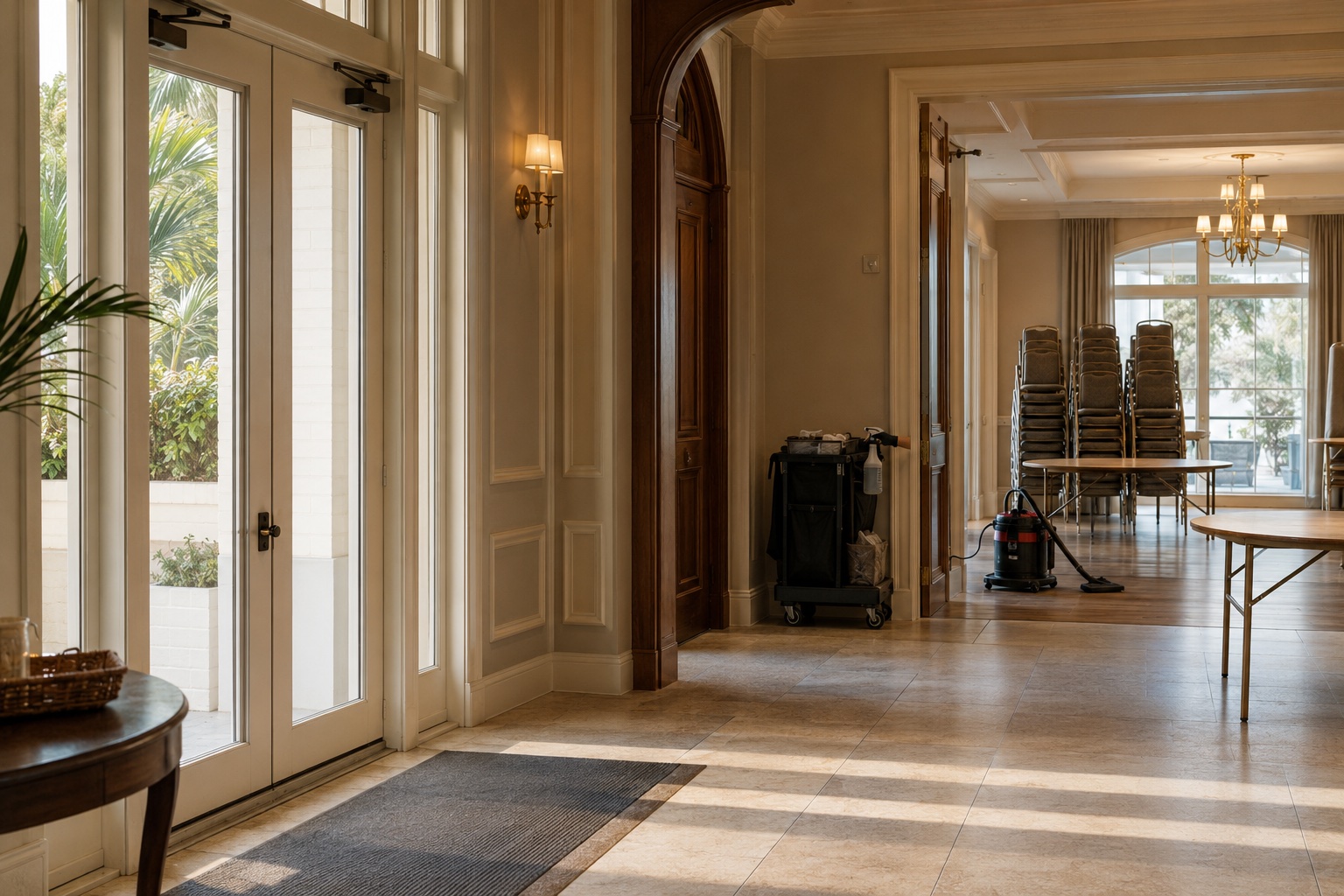
3. Clean the Areas Incoming Guests Will See First
Do not treat every task as equally urgent during a short turnover.
Prioritize the areas that affect reopening readiness first.
Check:
- Entrance glass
- Lobby floors
- Visible trash
- Restroom fixtures and supplies
- Seating areas
- Food or beverage residue
- High-touch surfaces
- Spills
- Noticeable odors
- Conditions that could interfere with safe movement
Entrances often need more than one check. Guests leaving the previous event, vendors moving equipment, and the next setup crew can all track debris through the same area after it has already been cleaned.
Restrooms need the same level of attention. Clean fixtures and mirrors, remove waste, mop the floors, and check soap and paper supplies before the next group arrives.
Prioritizing guest-facing spaces does not mean ignoring backstage or service areas. It means sequencing the work so you do not discover a dirty lobby, empty dispenser, or visible spill during the final five minutes of the turnover.
4. Stage Supplies Before the Event Ends
A short reset window is the wrong time to search for trash liners, wait for a vacuum, or discover that no one has access to a locked supply room.
Stage the supplies and equipment before the turnover begins.
Depending on the cleaning scope, you may need:
- Trash liners
- Soap and paper products
- Microfiber cloths
- Appropriate surface cleaners
- Wet-floor signs
- Spill-response supplies
- Vacuums
- Mops and floor equipment
- Replacement cleaning tools
- Communication devices
- Keys, FOBs, or access cards
Place supplies close to the zones where teams will use them, as long as they do not block guest or staff movement.
In a large venue, repeatedly walking to one central supply room wastes valuable turnover time. A better setup gives each team what it needs before work starts.
Access deserves the same preparation.
Confirm who has permission to enter dressing rooms, backstage areas, controlled service spaces, storage rooms, and other restricted locations.
A useful Charleston event venue cleaning checklist includes these logistics because missing access can delay the reset just as easily as missing cleaning supplies.
5. Separate Turnover Cleaning From Deep Cleaning
Do not try to complete every maintenance task between two events.
A Charleston event venue cleaning checklist should separate the work that must happen during the turnover from deeper cleaning that belongs on a periodic schedule.
Immediate turnover tasks may include:
- Removing trash
- Responding to spills
- Resetting restrooms
- Cleaning visible glass
- Vacuuming or mopping high-traffic areas
- Cleaning seating and shared surfaces
- Restoring entrances and lobbies
- Addressing visible food or beverage residue within the cleaning scope
These tasks directly affect whether the space is ready for the next group.
Deeper services may include:
- Carpet extraction
- Floor burnishing
- Stripping and waxing
- High dusting
- Deep kitchen detailing
- Pressure washing
- Detailed exterior window cleaning
Trying to fit restorative work into every turnover creates an unrealistic schedule.
A ballroom floor may need vacuuming or mopping after an event without needing full restorative treatment every time.
Use floor type, traffic, visible condition, and scheduled maintenance needs to decide when deeper service belongs on the calendar.
Your Charleston event venue cleaning checklist should make that distinction clear so the turnover crew can focus on reopening the venue instead of attempting work that belongs in a separate maintenance window.

6. Coordinate Cleaning With Vendors and Setup Crews
Cleaning rarely happens in an empty event venue.
Your crew may be working alongside:
- Event staff
- Caterers
- Decorators
- Audio-visual teams
- Security
- Rental companies
- Waste-removal teams
- The next event’s setup crew
Many turnover delays happen because teams compete for access.
Furniture may block a floor that needs cleaning. Catering equipment may still occupy counters. A rental company may control the service elevator. Decorations may remain in place because no one knows who owns removal.
Assign one venue contact who can make decisions during the turnover.
That person should be able to:
- Confirm when a zone has been released
- Resolve access problems
- Clarify who removes leftover materials
- Approve changes when the schedule shifts
- Coordinate with the next setup crew
Put that person’s name or role on the Charleston event venue cleaning checklist.
The cleaning team should not lose time tracking down multiple people for answers during a short reset.
7. Finish With a Readiness Inspection
Completing the cleaning tasks does not automatically mean the venue is ready.
Use your Charleston event venue cleaning checklist to walk the property before the next event begins and review the same zones used during the turnover.
Check:
- Entrances and lobby: clean glass, floors, and guest paths
- Restrooms: fixtures, floors, waste, soap, and paper supplies
- Floors: spills, visible debris, and areas that still need attention
- Trash: guest-facing receptacles and collection points
- Seating areas: visible debris and reset condition
- Glass and shared surfaces: fingerprints, smudges, and residue
- Catering or concession areas: cleared surfaces and waste within scope
- Backstage or preparation areas: assigned reset tasks are complete
- Odors: anything noticeable that needs immediate attention
- Cleaning equipment: tools and supplies are out of guest paths
- Room setup: the space has been handed back in the expected condition
Ask one simple question: Is the venue ready for the next event?
That question is more useful than checking whether every task has a mark beside it.
The final walkthrough catches problems while there is still time to correct them.
Use This Quick Turnover Check Before Every Event
Before the reset begins, confirm:
- What time can cleaning actually start?
- Which areas become available first?
- Who owns each cleaning zone?
- Which guest-facing areas need priority?
- Are supplies already staged?
- Does the team have every key, FOB, or access credential it needs?
- Which tasks belong in the turnover, and which require separate scheduling?
- Who has authority to resolve access or vendor conflicts?
- Who conducts the final readiness inspection?
If those answers are clear before guests start leaving, the cleaning crew can spend the turnover cleaning instead of solving logistical problems.
Build the Turnover Plan Before the Clock Starts
A Charleston event venue cleaning checklist works best when it organizes people, timing, access, and priorities before the reset begins.
Map the real cleaning window. Divide the building into zones. Stage supplies. Coordinate vendors. Keep deep maintenance separate from immediate turnover work. Then inspect the property from the perspective of the next arriving guest.
If short event turnovers regularly create cleaning or coordination problems, Elite Touch Cleaning Services can review the venue layout, current schedule, access requirements, and cleaning zones during a facility walkthrough.
Frequently Asked Questions
-
Include entrances, guest areas, restrooms, floors, trash, high-touch surfaces, food-service spaces within the approved scope, backstage or preparation areas, and a final readiness inspection. Also identify who owns each zone and when the cleaning team can access it.
