
What Should Be on a Charleston Industrial Cleaning Checklist? 5 Warning Signs
Use These Warning Signs to Evaluate Your Industrial Cleaning Plan
A Charleston industrial cleaning checklist should help facility managers catch recurring floor buildup, uncontrolled dust, restroom problems, waste handling gaps, and cleaning issues that keep coming back after service. When these problems repeat, the current cleaning scope, schedule, equipment, or inspection process may no longer match the way the facility operates.
Industrial buildings rarely stay consistent from one area to the next. Loading activity, production schedules, employee traffic, hard flooring, packaging debris, restricted areas, and multiple shifts all affect what needs attention.
Instead of waiting for complaints or visible buildup, use these five warning signs to evaluate how well your current cleaning plan is working.
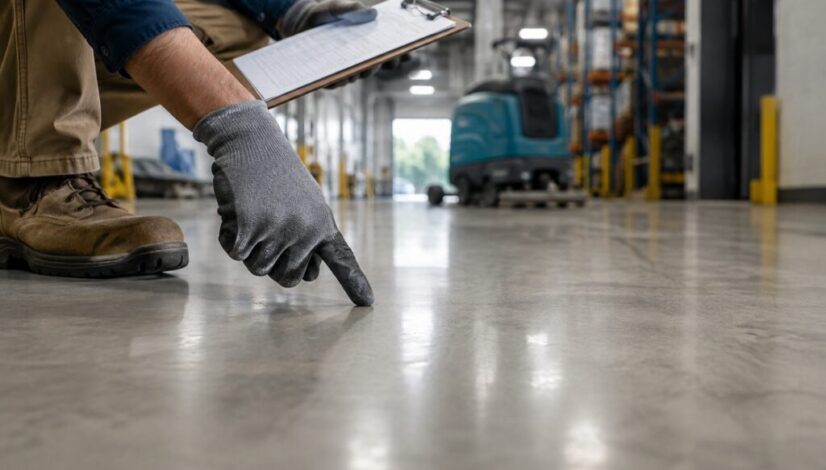
1. Floor Buildup Returns Before the Next Cleaning
Floors often reveal cleaning problems before other areas do, which is why floor conditions should be a key part of your Charleston industrial cleaning checklist.
During a walkthrough, look for:
- Dark traffic lanes
- Cart or tire marks
- Soil collecting along edges
- Dull or uneven finishes
- Recurring stains
- Dust around equipment lines
- Residue near entrances and loading areas
Routine sweeping and mopping remove loose debris, but they do not always correct compacted soil or buildup that has settled into the floor surface.
Use your Charleston industrial cleaning checklist to record the floor type, visible condition, traffic level, and the areas where soil returns fastest. Different surfaces require different maintenance methods. VCT, tile, polished concrete, carpet, and other flooring should not all receive the same treatment.
If floor conditions continue to decline, review the service plan rather than simply adding another general cleaning visit. Possible adjustments include:
- Increasing sweeping or dust-mopping frequency
- Machine scrubbing suitable hard floors
- Adding targeted spot treatment
- Improving entrance mat maintenance
- Spending more time on high-traffic routes
- Scheduling periodic burnishing or floor restoration
Machine scrubbing, burnishing, carpet extraction, and strip-and-wax work often fall outside standard janitorial service. Confirm what the cleaning scope includes before expecting routine cleaning to solve a deeper floor-care problem.
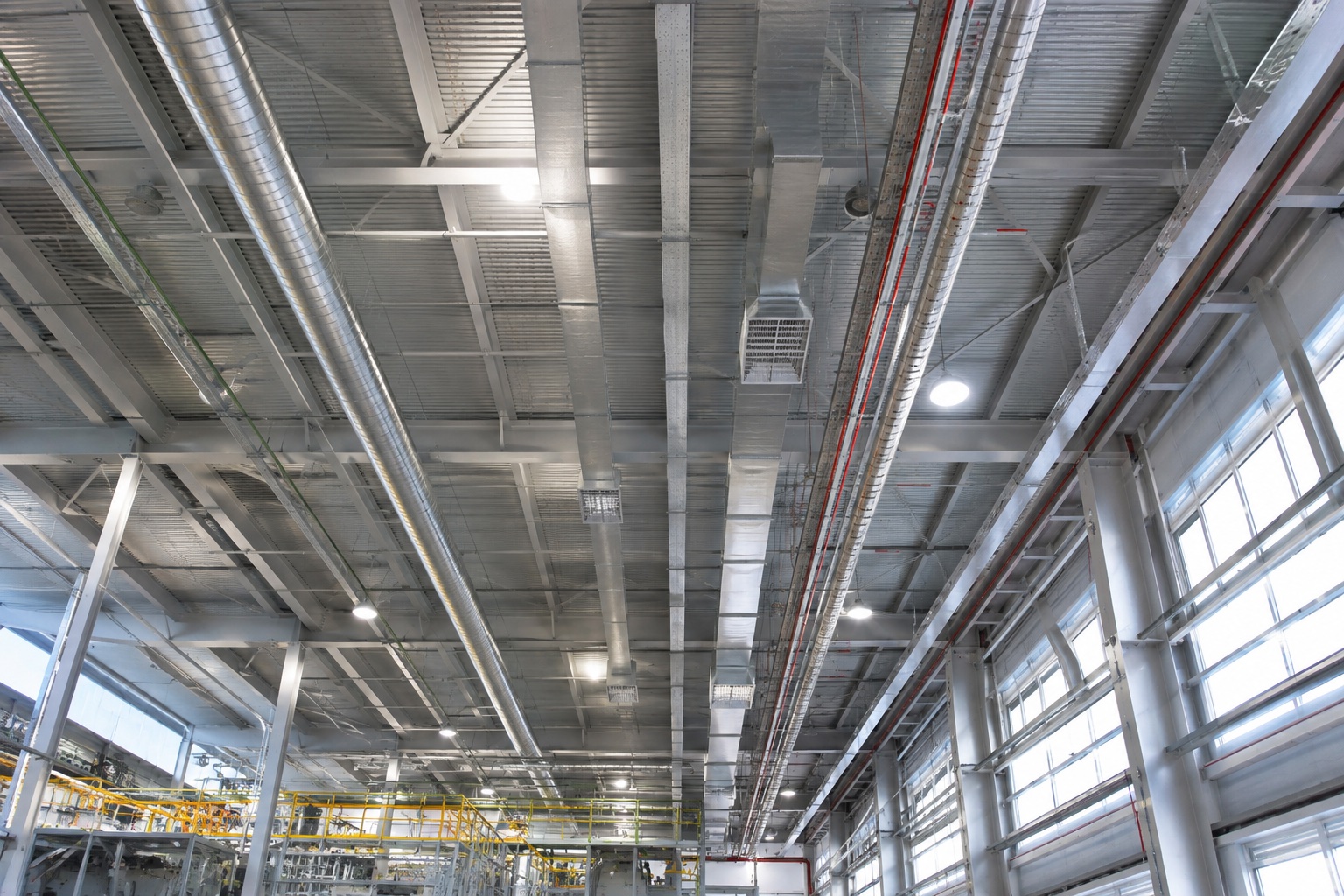
2. Dust Keeps Collecting Around Equipment and Elevated Surfaces
Dust on a main aisle is easy to spot. Dust behind equipment, on vents, above door frames, or along structural ledges can build up much longer before anyone notices it.
Production activity, packaging materials, loading activity, equipment movement, and normal air circulation can all move dust through an industrial facility.
A useful Charleston industrial cleaning checklist separates routine reachable dusting from periodic high dusting. That distinction makes responsibilities clearer and helps prevent areas from being ignored simply because they fall outside the normal daily route.
During your next walkthrough, ask:
- Which reachable surfaces are included in regular cleaning?
- How often are edges and corners detailed?
- Are equipment lines included in the cleaning scope?
- Does the schedule include high dusting?
- Who handles vents, ledges, and door tops?
- Are any areas restricted or difficult to access?
High dusting and ceiling vent detailing do not always belong to recurring janitorial service. Assign those tasks clearly instead of assuming the regular cleaning crew will address them automatically.
Use your Charleston industrial cleaning checklist to document exactly where dust returns and how quickly it comes back. A note such as “dust builds up above the west loading door within one week” gives you something specific to act on. “There is too much dust” does not.
3. Restrooms and Break Areas Generate the Same Complaints
One empty soap dispenser can be an isolated miss. Repeated supply shortages, odors, dirty partitions, sticky floors, or overflowing waste point to a larger problem.
Routine restroom service can include:
- Cleaning toilets, urinals, sinks, and faucets
- Wiping partitions and touchpoints
- Cleaning mirrors
- Emptying sanitary and waste receptacles
- Restocking soap and paper products
- Mopping floors
Breakroom cleaning may include countertops, tables, sinks, appliance exteriors, trash removal, and floor cleaning. Appliance interiors usually require separate scheduling unless the scope specifically includes them.
Your Charleston industrial cleaning checklist should account for how people actually use these areas. Look at employee count, restroom fixtures, shift schedules, break periods, and supply usage.
For example, a facility running multiple shifts may need restroom checks during the day even if the main cleaning crew works after hours. The same applies to break areas that see heavy use at predictable times.
The answer is not always “clean more often.” Use your Charleston industrial cleaning checklist to determine when the problem happens, what condition is recurring, and whether the current schedule lines up with real usage.
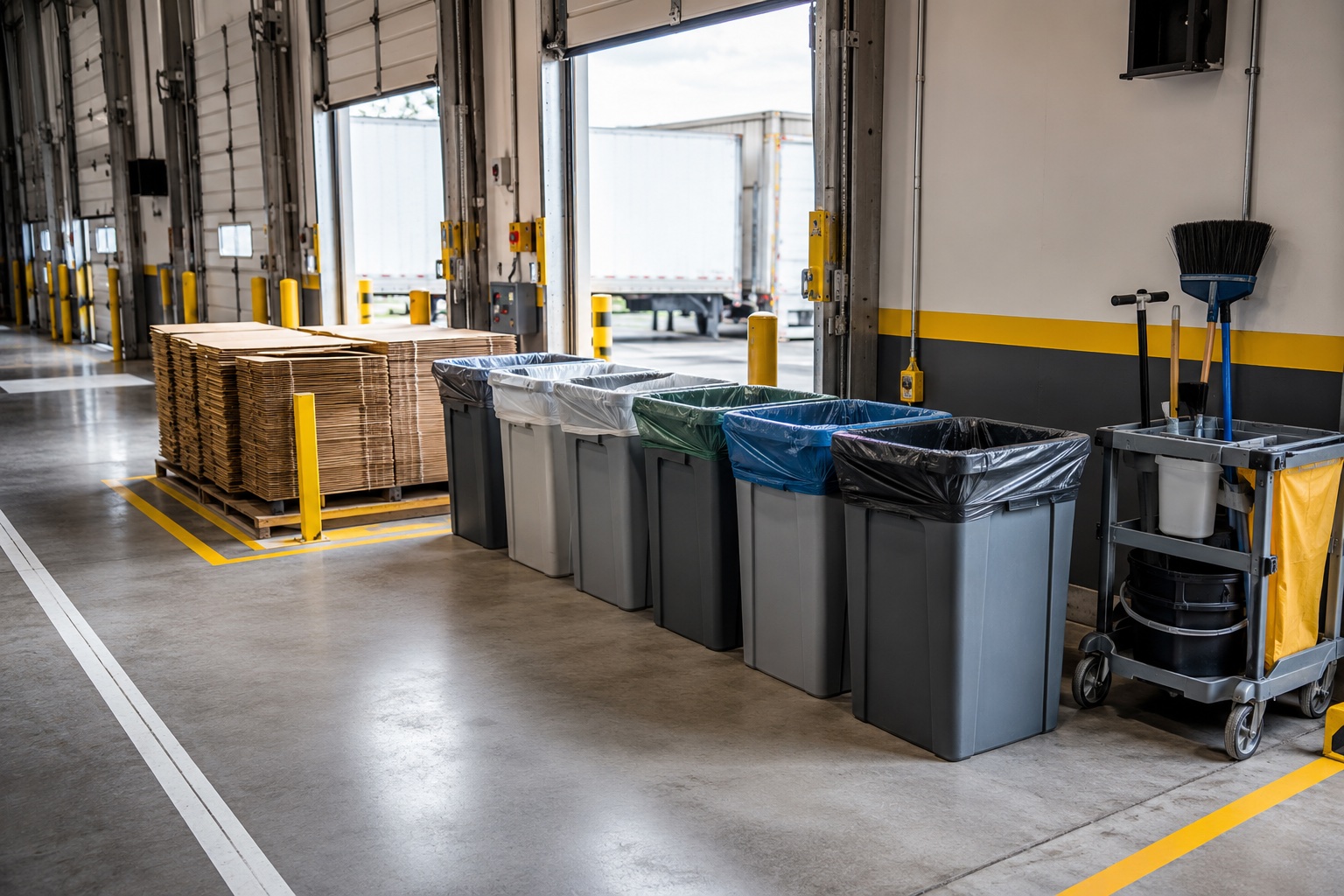
4. Waste and Loading Areas Fall Behind During Normal Operations
Waste areas often create recurring problems when responsibilities are unclear or service timing does not match production activity.
Look for:
- Receptacles filling before the next service
- Loose packaging around collection areas
- Liners not being replaced
- Debris near loading zones
- Odors that return quickly
- Waste left at the wrong collection points
- Confusion over what the cleaning crew handles
Routine commercial cleaning may include emptying common-area receptacles, replacing liners, consolidating waste, and moving it to designated collection points.
Do not assume a janitorial crew handles hazardous materials, chemicals, biohazards, or specialized production waste. Those responsibilities need to be clearly defined.
Use the Charleston industrial cleaning checklist to document approved waste types, collection points, service timing, loading-area responsibilities, and exclusions.
Also pay attention to timing. If receptacles regularly overflow halfway through a shift, changing the collection schedule may solve the problem more effectively than adding another unrelated cleaning task.
5. The Same Cleaning Problems Keep Coming Back
A facility can look acceptable immediately after service and still have an unreliable cleaning program.
If the same floor area, restroom, waste point, or dust problem repeatedly falls below expectations, review the inspection and follow-up process.
Useful quality controls include:
- Site-specific cleaning checklists
- Supervisor inspections
- Photo and time-stamp documentation
- Client communication logs
- Clearly assigned account responsibility
- Crew training based on the approved scope
- A defined process for correcting service issues
The goal of a Charleston industrial cleaning checklist is to track patterns, not just completed tasks.
A strong Charleston industrial cleaning checklist should tell you more than whether someone checked a box. It should show whether a problem keeps returning, where it happens, and whether the service plan changes in response.
If the same issue appears during multiple inspections, determine why. The cause may be an unclear task, insufficient frequency, restricted access, missed periodic work, or a mismatch between the cleaning process and the surface or area.
Use This Quick Industrial Facility Self-Check
Walk the facility near the end of a normal workday rather than immediately after cleaning. That gives you a more realistic picture of how the cleaning plan performs during actual operations.
Ask:
- Which floors look dirty before the next service visit?
- Where does dust accumulate fastest?
- Do restrooms stay stocked through every shift?
- Do break areas remain usable between cleaning visits?
- Are loading and waste responsibilities clearly assigned?
- Do the cleaning tasks include edges, ledges, corners, and equipment lines?
- Do inspection records match what you see during the walkthrough?
- Do recurring problems lead to actual changes in the cleaning plan?
Document the exact location, time, shift, and condition.
For example, “dust returns beside packaging line three within two days” gives the cleaning team a clear problem to investigate. “The facility looks dirty” gives them very little direction.
FAQs
-
Review the checklist whenever staffing, shifts, production activity, traffic, access procedures, or facility conditions change. Also revisit it when the same cleaning issue continues to appear during inspections.
Turn Your Charleston Industrial Cleaning Checklist Into a Better Plan
Not every cleaning problem means you need more service visits.
An incomplete scope, the wrong floor process, missed periodic work, restricted access, or weak inspection follow-through can all create similar visible problems. The most useful checklist helps you identify which issue is actually happening before you change the schedule.
A practical Charleston industrial cleaning checklist should account for floor types, restroom use, waste volume, operating shifts, traffic patterns, restricted areas, and periodic maintenance needs.
If your checklist keeps uncovering the same issues, Elite Touch Cleaning Services can review the affected areas, current schedule, and cleaning scope with your facility team. Request a facility walkthrough to identify practical adjustments based on how the building is actually used.
