
7 Common Commercial Cleaning Mistakes Property Managers in Charlotte Should Avoid
How to Avoid Commercial Cleaning Mistakes That Affect Your Property
A commercial building can receive regular cleaning and still experience recurring complaints, worn surfaces, and areas that consistently get overlooked. Often, the problem isn’t a lack of cleaning but how services are scheduled, assigned, and monitored.
For property managers in Charlotte, NC, avoiding common commercial cleaning mistakes starts with identifying where daily cleaning operations fall short. Missed tasks, unsuitable cleaning products, and unclear responsibilities can create ongoing problems that affect building appearance, tenant satisfaction, and maintenance costs.
Here are seven common mistakes to watch for, along with practical ways to prevent them and maintain a cleaner, better-managed commercial property.
1. Using a Cleaning Schedule That No Longer Matches Building Activity
A cleaning schedule may work well when a building first opens or undergoes a management change. However, building usage rarely remains the same over time.
New tenants, extended operating hours, increased occupancy, and changes in shared-space usage can all affect cleaning requirements.
For example, a multi-tenant office building that introduces evening operations may need more frequent restroom cleaning, waste collection, and common-area maintenance.
How to avoid it: Compare your cleaning schedule against actual building activity. Identify the busiest areas, review when complaints occur, and determine whether certain cleaning tasks consistently fall behind.
Reevaluate the schedule whenever occupancy, operating hours, or building usage changes significantly. Working with a provider that offers customized cleaning services can help ensure your cleaning program continues to meet your property’s needs.
2. Using Cleaning Products That Are Unsuitable for the Surface
One of the most costly commercial cleaning mistakes is assuming that a product suitable for one surface will work equally well on another.
Commercial buildings often contain various materials that require different cleaning methods and levels of care. A product appropriate for ceramic tile may be unsuitable for finished wood, natural stone, or certain coated flooring materials.
Using the wrong cleaning chemicals can damage protective finishes, cause discoloration, or leave residues that affect appearance and long-term durability.
How to avoid it: Maintain an inventory of the primary surface materials throughout your property, including flooring, countertops, fixtures, and specialty finishes.
Verify that cleaning products and equipment meet manufacturer recommendations. Cleaning personnel should follow product labels, dilution instructions, and applicable safety precautions.
When dealing with unfamiliar materials, confirm the proper cleaning procedure before applying a new treatment.
For facilities with multiple flooring types, professional floor cleaning and maintenance can help protect surfaces and reduce unnecessary wear.
3. Overlooking High-Touch Areas During Routine Cleaning
A restroom floor may look spotless while fingerprints, residue, and grime remain on door handles. Similarly, an elevator may appear clean even though its buttons and control panels have been overlooked.
These are common examples of incomplete cleaning coverage.
High-touch surfaces vary by property but frequently include:
- Elevator buttons and control panels
- Door handles and push plates
- Stairway handrails
- Shared conference room controls
- Breakroom appliance handles
- Reception counters and frequently used fixtures
For Charlotte property managers, preventing commercial cleaning mistakes involving high-touch surfaces requires more than simply instructing staff to clean common areas.
How to avoid it: Identify frequently touched surfaces throughout your facility and include them in documented cleaning checklists.
Establish appropriate cleaning and disinfection procedures based on surface materials, usage patterns, and applicable product instructions.
During routine inspections, verify that these surfaces have received the required attention rather than judging cleanliness solely by a room’s overall appearance.
Consistent facility cleaning inspections help identify overlooked areas before they become recurring complaints.
4. Waiting Too Long to Respond to Spills
Small spills can quickly become larger facility maintenance concerns when no one knows who is responsible for addressing them.
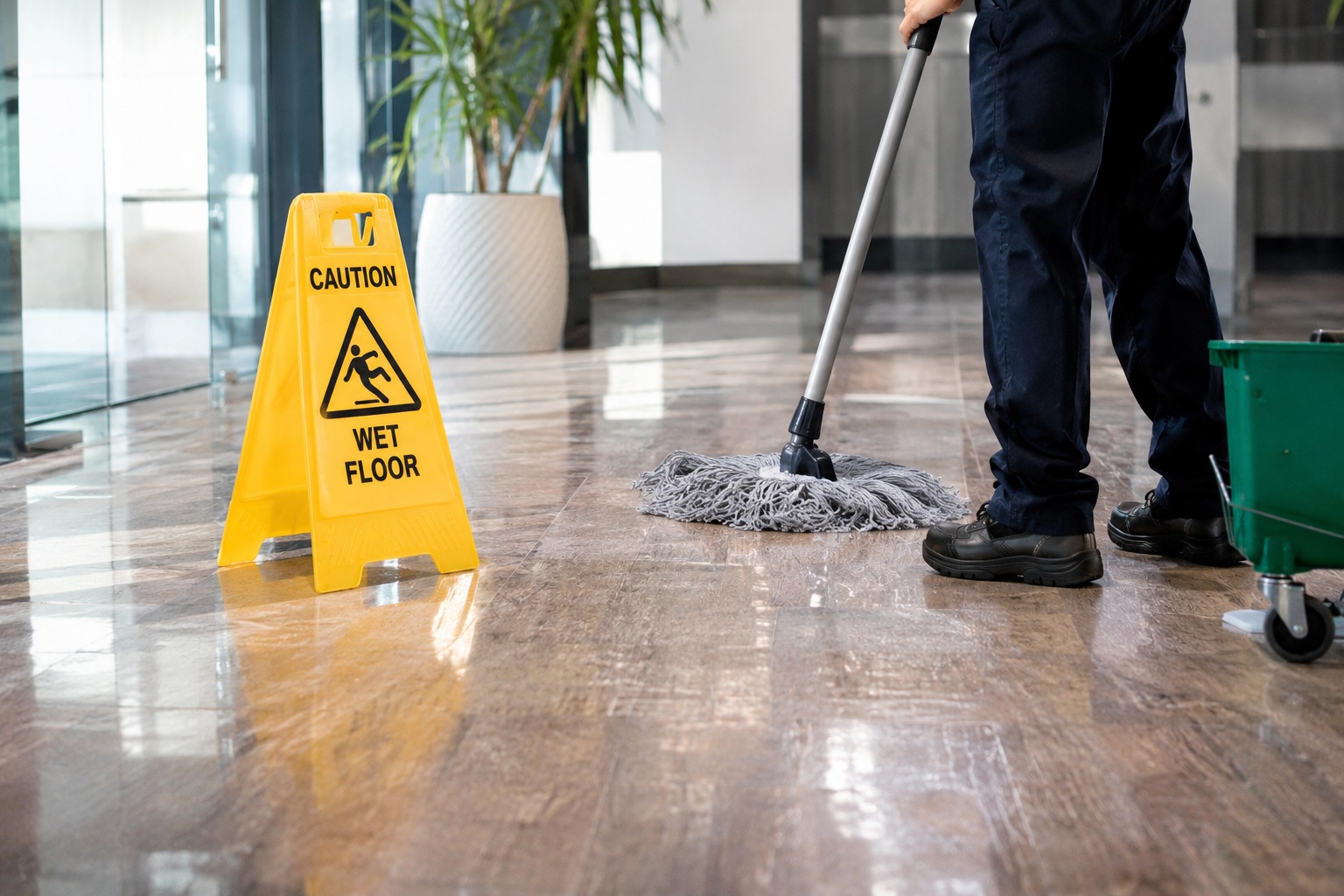
A spilled beverage in a shared breakroom may go unnoticed until someone reports a sticky floor or stained carpet. Delayed cleanup can make stains more difficult to remove and increase the risk of slips and falls.
Often, the underlying issue is poor communication between building occupants, property management, and the cleaning company.
How to avoid it: Establish a clear spill-reporting procedure that identifies who receives reports and who is authorized to respond.
Building occupants should understand how to report spills promptly. When appropriate, affected areas should be secured until cleanup is completed using approved procedures for the spilled material.
Unidentified or potentially hazardous substances should be handled only by appropriately trained personnel.
A documented response process helps protect building occupants, reduces unnecessary damage to floors and other surfaces, and prevents commercial cleaning mistakes caused by delayed spill cleanup.
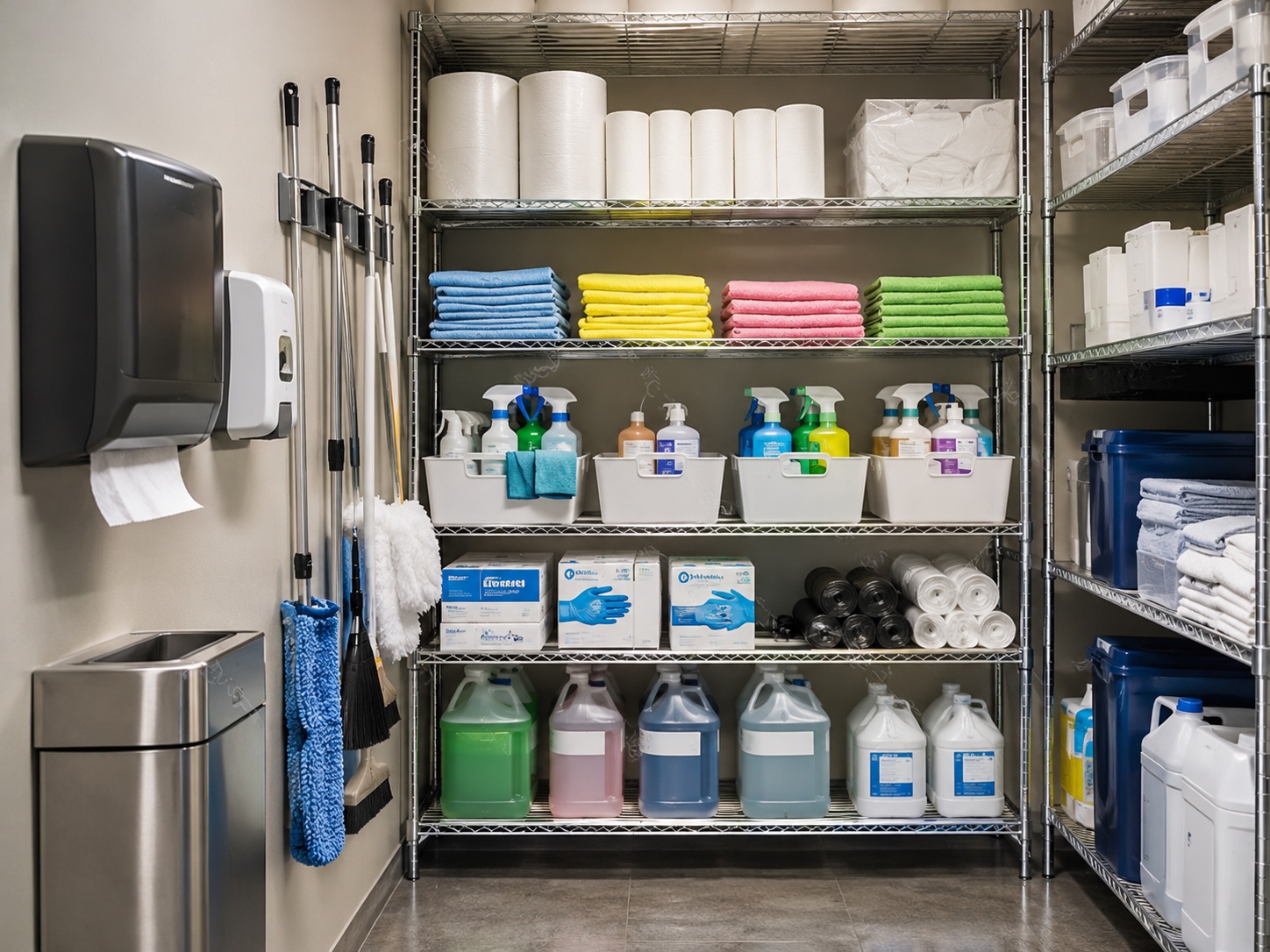
5. Managing Cleaning Supplies Without a Reliable Restocking Process
Running out of soap, paper towels, trash liners, or approved cleaning products can interrupt service even when the cleaning team follows its assigned schedule.
Poor inventory management is one of the commercial cleaning mistakes that may go unnoticed until building occupants begin complaining.
Sometimes supplies are available but stored in inaccessible locations. In other situations, no one has been assigned responsibility for checking inventory or requesting replacements.
How to avoid it: Establish minimum inventory levels for essential cleaning supplies and designate someone to conduct regular stock checks.
Your restocking procedure should clearly identify who purchases supplies, where materials are stored, and how shortages are reported.
Consider whether limited storage space, delivery schedules, or restricted building access could interfere with replenishment.
Reliable inventory management helps prevent service interruptions, reduces commercial cleaning mistakes associated with supply shortages, and ensures cleaning personnel have the products needed to complete their assigned responsibilities.
6. Leaving Cleaning Responsibilities Unclear
When a recurring cleaning task gets missed, the first question is often, “Who was supposed to handle it?”
This problem is especially common in multi-tenant commercial buildings where responsibilities may be divided among property management, tenants, maintenance personnel, and an outside cleaning company.
For example, a cleaning contract might cover shared corridors and restrooms but exclude individual tenant suites. Conference tables may only be cleaned after occupants remove personal belongings and equipment.
Unclear boundaries create expectations that the cleaning team may never have agreed to fulfill.
How to avoid it: Document the cleaning scope by area, task, service frequency, and responsible party.
Confirm access requirements for locked rooms, waste collection locations, and workspaces that must be cleared before cleaning.
Establish procedures for reporting tasks that cannot be completed because of access restrictions or other obstacles.
Property managers can prevent recurring commercial cleaning mistakes by ensuring everyone works from the same documented cleaning scope and understands how exceptions are handled.
A trusted commercial cleaning provider should help establish clear expectations and maintain consistent communication throughout the service relationship.
7. Expecting Routine Cleaning to Replace Specialized Maintenance
Daily janitorial services address ongoing cleaning needs, but certain facility conditions require specialized equipment, cleaning methods, or professional evaluation.
Carpet traffic lanes with embedded dirt, deteriorating floor finishes, and heavy buildup may remain visible after routine cleaning because they require different treatments.
For example, carpet extraction and floor stripping or refinishing are generally separate from standard janitorial services unless specifically included in the cleaning agreement.
Repeatedly attempting to correct these problems with ordinary cleaning products can waste time and potentially damage building surfaces.
How to avoid it: Separate routine cleaning responsibilities from periodic and specialized maintenance services in your property’s maintenance plan.
Review floor conditions, manufacturer recommendations, and maintenance records before determining which treatments are appropriate.
Professional floor maintenance services can help address embedded soil, deteriorating finishes, and other conditions that routine cleaning cannot resolve.
Understanding the limitations of daily janitorial work helps property managers avoid commercial cleaning mistakes that contribute to premature surface wear, unnecessary expenses, and recurring maintenance concerns.
Get Your Cleaning Program Back on Track with Elite Touch
For property managers in Charlotte and throughout North Carolina and South Carolina, recurring cleaning complaints, inconsistent service, unclear responsibilities, and overlooked areas may indicate that it’s time to reassess the property’s commercial cleaning program.
At Elite Touch Cleaning Services, we provide trusted commercial cleaning solutions tailored to each property’s layout, daily operations, and maintenance requirements. Our expert cleaning team uses site-specific checklists, supervisor inspections, and SWEPT documentation to monitor service quality, improve communication, and address concerns promptly.
We also help property managers determine when routine janitorial services need adjustments or when specialized cleaning and maintenance may be necessary to protect building surfaces and maintain a professional appearance.
Avoid costly commercial cleaning mistakes before they affect your property’s appearance, tenant satisfaction, or long-term maintenance needs. Contact the professionals at Elite Touch Cleaning Services to discuss your facility’s needs and develop a customized cleaning plan that delivers consistent, dependable results.
FAQs About Commercial Cleaning Mistakes
-
The most common commercial cleaning mistakes include outdated cleaning schedules, using improper cleaning products, overlooking high-touch surfaces, delayed spill cleanup, poor supply management, unclear cleaning responsibilities, and neglecting specialized maintenance. Addressing these issues helps Charlotte property managers maintain cleaner, safer, and more professional commercial facilities.
