
What Should Hotels in Charleston Include in a Common-Area Cleaning Checklist?
Turn Cleaning Inspections Into a Better Service Plan
A hotel common-area cleaning checklist in Charleston should cover every guest-facing shared space, including entrances, lobbies, elevators, hallways, stairwells, public restrooms, meeting areas, shared amenities, and flooring. It should also define what staff inspect during each service visit, which details receive periodic attention, and when traffic or facility conditions call for additional cleaning.
For hotel managers, the goal is not simply to create a task list. A practical checklist gives the team a repeatable way to inspect the property, catch visible problems before they build up, and adjust service according to guest traffic, events, occupancy, and the condition of individual surfaces.
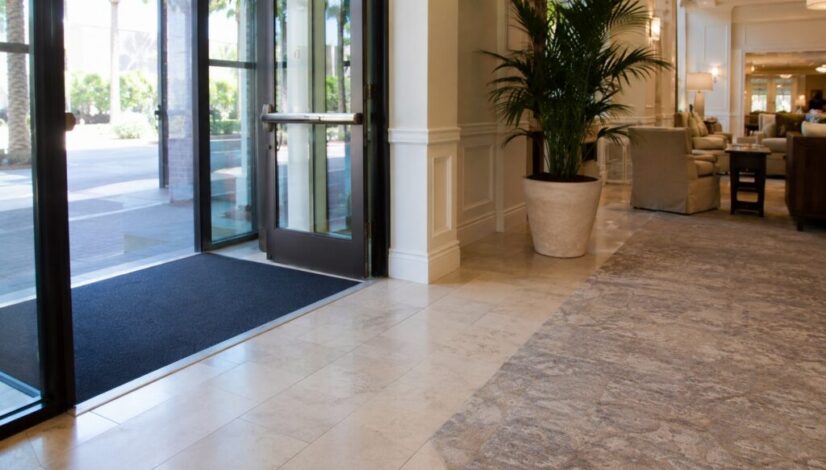
Start With Entrances and Guest Arrival Areas
Guests begin forming an impression of the property before they reach the front desk. Entrances and vestibules therefore need routine cleaning along with regular visual inspections.
A hotel common-area cleaning checklist in Charleston should include:
- Clean interior entrance glass and remove fingerprints, streaks, and smudges.
- Vacuum entrance mats and surrounding carpeted areas.
- Sweep or mop hard-surface flooring.
- Empty common-area waste receptacles and replace liners.
- Spot-clean doors, walls, ledges, and other visibly marked surfaces.
- Check corners and edges for tracked-in debris that routine cleaning may miss.
The inspection matters as much as the cleaning itself. Review the entrance during periods of heavier guest movement. If soil, moisture, debris, or fingerprints return quickly, the area may need another touch-up before the next full service.
Keep Lobby Cleaning Focused on High-Visibility Details
The lobby combines foot traffic, seating areas, front-desk activity, luggage movement, and frequent use of shared surfaces.
A practical hotel common-area cleaning checklist in Charleston should require teams to vacuum rugs and carpeted traffic lanes, mop hard floors, dust reachable furniture and ledges, spot-clean walls and doors, clean interior glass, and empty waste containers.
Inspect beyond the center of the room. Soil and marks often become more noticeable along furniture edges, near entrances, around seating groups, and along routes between the front desk and elevators.
High-touch surfaces should also be part of the recurring scope. These may include handles, doors, elevator controls, and other shared touchpoints. Make cleaning responsibilities specific enough that these surfaces don’t fall between front-of-house and cleaning teams.
Inspect Elevators, Hallways, and Stairwells Separately
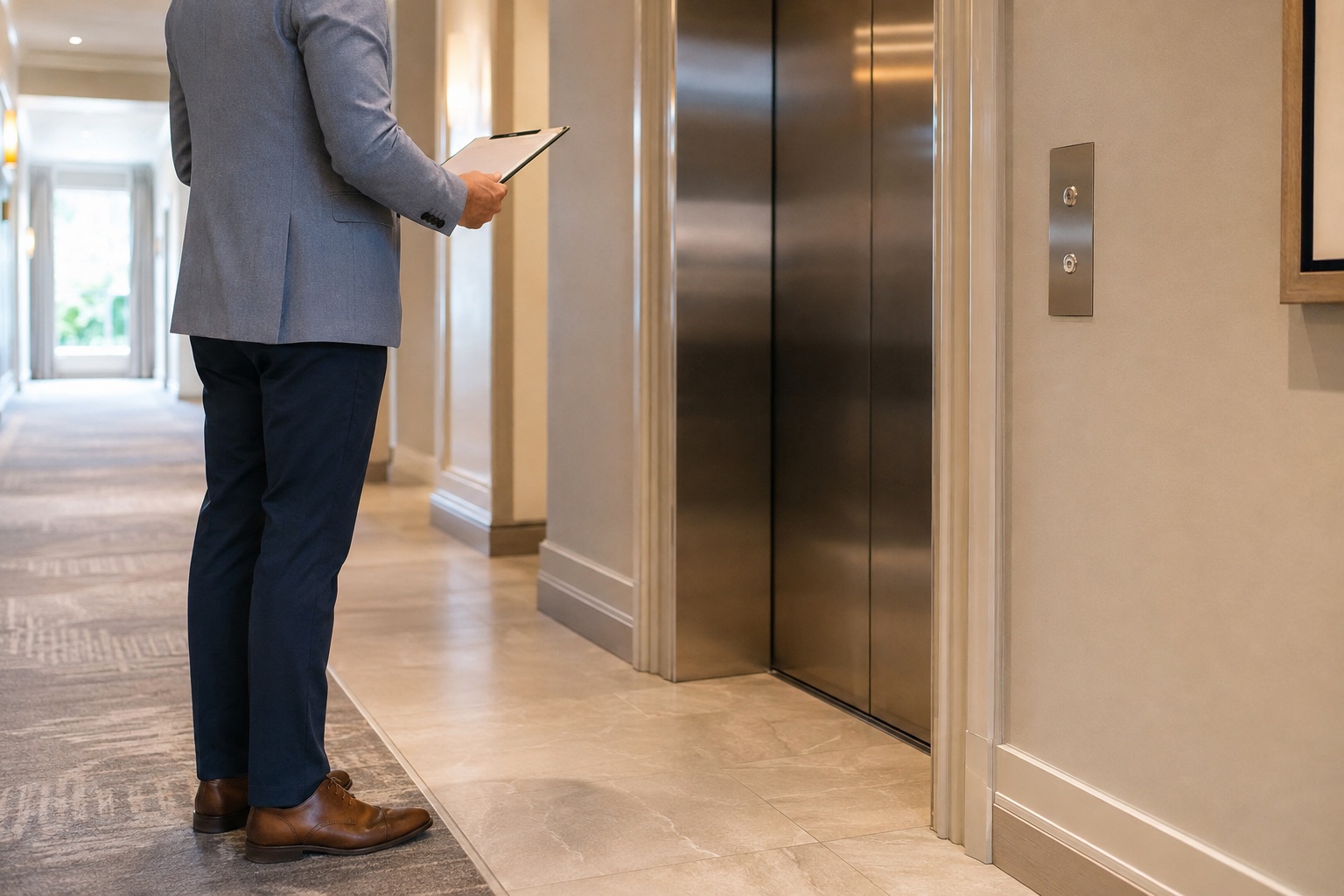
Grouping all circulation areas under one checklist line makes it easier to overlook details. Separate elevators, hallways, and stairwells so each area has its own inspection points.
Elevators
Inspect:
- Elevator buttons and control panels
- Interior glass where present
- Smudges on doors and other visible surfaces
- Floor edges and corners
- Debris tracked into the cab
Elevators can show visible wear quickly because a small area receives repeated contact throughout the day. Review them according to actual traffic rather than relying only on an end-of-day inspection.
Hallways
Include vacuuming or mopping, dusting reachable ledges, spot-cleaning walls, and removing visible debris. Pay particular attention to transitions near elevators, meeting rooms, amenity entrances, and other high-traffic areas
Stairwells
Dust handrails and ledges, remove debris from steps and landings, spot-clean walls, and vacuum or mop the flooring according to the surface type.
Keeping these areas separate makes a hotel common-area cleaning checklist in Charleston more useful because managers can identify exactly where service quality is slipping.
Give Public Restrooms Their Own Detailed Checklist
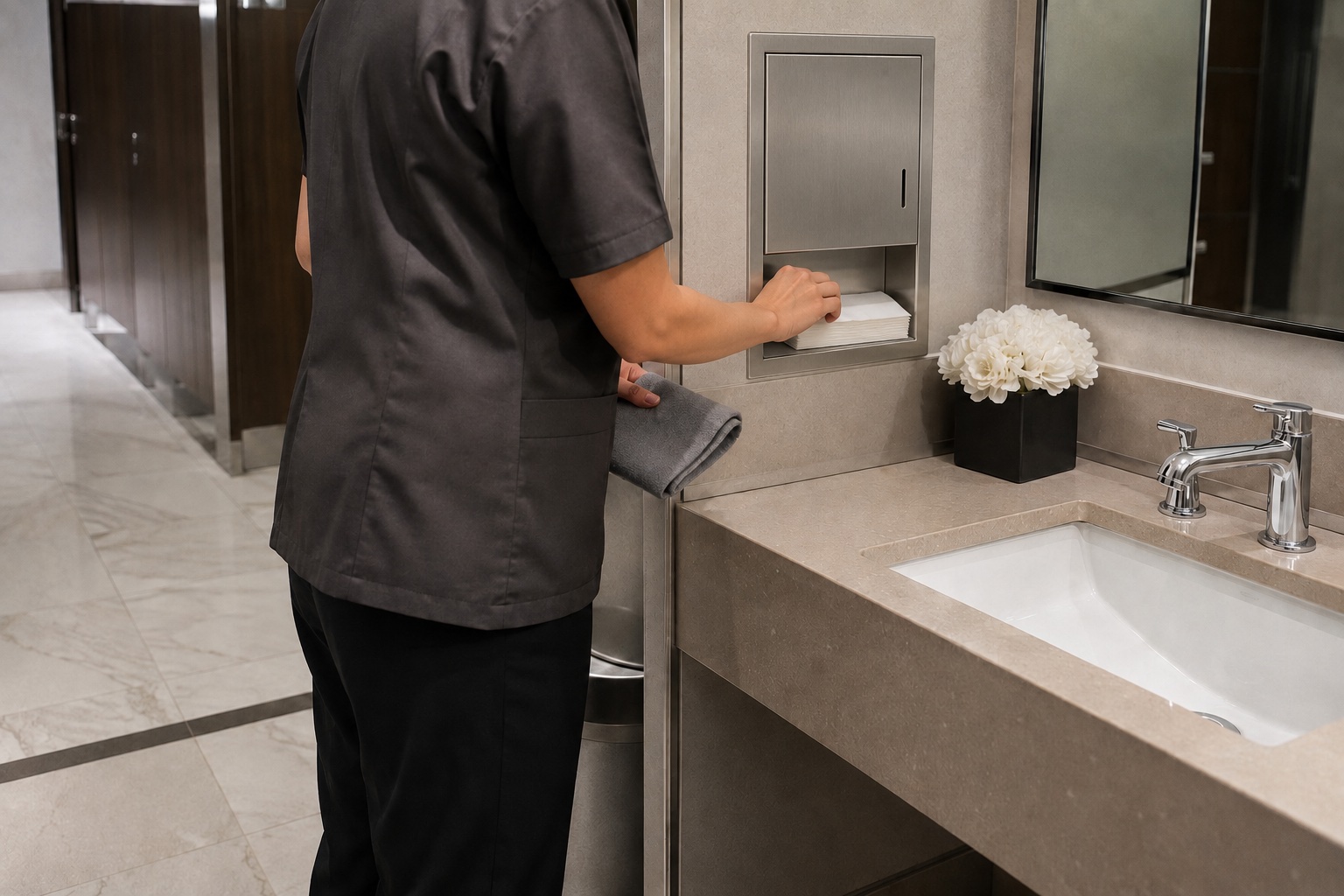
Public restrooms need more detail than a general instruction to “clean restroom,” which is why they should have a dedicated section in a hotel common-area cleaning checklist in Charleston.
Each service visit should address toilets, urinals where present, sinks, faucets, partitions, mirrors, chrome, trash receptacles, sanitary receptacles, visibly marked walls or doors, and floors. Soap and paper products should also be checked and replenished.
Managers should inspect both cleanliness and readiness. A restroom may appear acceptable at first glance but still create a poor guest experience if dispensers are empty, mirrors are marked, trash is approaching capacity, or soil is accumulating around floor edges.
Periodic detail work matters as well. Partitions, base areas, and other surfaces that receive less attention during routine service should have their own scheduled review instead of waiting for visible buildup.
Build Meeting and Shared-Amenity Cleaning Around Actual Use
Hotels often have common areas whose use changes significantly from one day to the next. Meeting spaces, business centers, lounges, fitness-related common spaces, and similar amenities should not automatically receive the same cleaning frequency.
For meeting areas, the checklist may include:
- Wipe cleared tables.
- Dust furniture and reachable ledges.
- Spot-clean interior glass.
- Empty trash and replace liners.
- Vacuum carpet or mop hard flooring.
- Inspect the room again after scheduled events when needed.
For other shared amenities, define the surfaces and tasks that belong to the cleaning scope. Avoid vague instructions such as “clean amenity area.” Name the floors, waste containers, glass, furniture, touchpoints, and other surfaces that staff are responsible for checking.
A useful hotel common-area cleaning checklist in Charleston should also distinguish routine recurring service from separately scheduled work. Deeper floor care, carpet extraction, and other periodic services should not be assumed to happen during every standard cleaning visit.
Match Floor Care to Traffic, Surface Type, and Condition
Floors connect nearly every common area, but one cleaning frequency does not fit an entire hotel, making floor condition an important part of a hotel common-area cleaning checklist in Charleston.
High-traffic areas generally require more frequent vacuuming or mopping than quieter corridors or secondary spaces.
During inspections, look for:
- Visible soil in main walking paths
- Spills or sticky residue
- Stains in carpeted areas
- Debris along edges and corners
- Dull or uneven-looking hard flooring
- Recurring marks near elevators and entrances
Routine cleaning may include vacuuming, dust mopping, wet mopping, and spot treatment depending on the floor surface and agreed scope. Plan more intensive services such as carpet extraction, machine scrubbing, burnishing, or stripping and waxing separately when the surface and condition require them.
That distinction keeps a hotel common-area cleaning checklist in Charleston realistic and prevents managers from expecting routine service to correct every floor-care issue.
Set Cleaning Frequencies Based on How the Hotel Is Used
Cleaning frequency should reflect actual building use rather than a single blanket schedule.
Tasks often handled during each service visit include trash removal, restroom cleaning and restocking, high-traffic vacuuming, spot glass cleaning, and attention to high-touch surfaces. More detailed vacuuming, thorough mopping, full interior glass cleaning, and similar detail work may follow a separate recurring schedule.
Periodic tasks can include high dusting, carpet spot treatment, restroom detailing, and machine floor care where applicable.
Do not treat any interval as universal. Increase attention when you see clear operational triggers, such as:
- Higher guest or event traffic
- Repeated restroom supply shortages
- Meeting spaces turning over several times in one day
- Fast-returning fingerprints or glass marks
- Recurring floor soil near entrances or elevators
- Waste receptacles filling between scheduled visits
A hotel common-area cleaning checklist in Charleston should combine baseline responsibilities with a process for adjusting service when conditions change.
Add a Manager Inspection That Reviews Results
A checked box confirms that someone marked a task complete. It does not automatically confirm the condition of the space.
Managers should perform a short walkthrough that follows the same route a guest might take: entrance, lobby, elevator, hallway, meeting or amenity area, public restroom, and another circulation path through the property.
During the inspection, document recurring conditions instead of recording only general complaints. Note the exact location, surface, time of day, and problem.
For example:
“Fingerprints are returning on lobby entrance glass by 3 p.m.”
That information is more actionable than a note such as “glass needs cleaning.”
Over several inspections, these observations help determine whether the issue is inconsistent execution, an unclear scope, or a cleaning frequency that no longer matches the way the property is being used.
Use the Checklist to Improve the Cleaning Plan
The best hotel common-area cleaning checklist in Charleston is detailed enough for staff to follow and flexible enough to change when traffic, events, occupancy, or facility conditions change. Define responsibilities by area, separate routine cleaning from periodic services, and inspect results at the times guests are most likely to experience the space.
For hotel managers in Charleston who want to compare the current common-area scope with how the property is actually being used, Elite Touch Cleaning Services can review the facility during a walkthrough and discuss a cleaning plan built around guest-facing spaces.
Frequently Asked Questions
-
Frequency should depend on traffic, the type of space, surface condition, and how quickly visible issues return. Entrances, public restrooms, elevators, and other busy areas often need attention during each service visit, while deeper detailing can be scheduled separately.
